
The Sea is Calling
There are weeks in the studio that focus less on creating finished works and more on listening to feelings, a pull in a particular direction, or a sense of something on the horizon that you want to be ready for.
This has been one of those weeks. My thoughts have been entirely out at sea, somewhere along a rocky coastline, in the cold salt air, among the weathered boats, stone walls, and birds riding the wind. There are days when the sea feels close, even when it is not in front of me.
Next week I'll be heading to a couple of fishing villages on the Scottish coast, sketchbook and camera in hand, ready to immerse myself in that landscape I love so much.
In anticipation of this trip, everything I have done in the studio this week has revolved around the ideas of the coastline, salt air, and surfaces shaped by time and tide.
Here is what that looked like.
Seascape Sketches: Neocolour and Collage
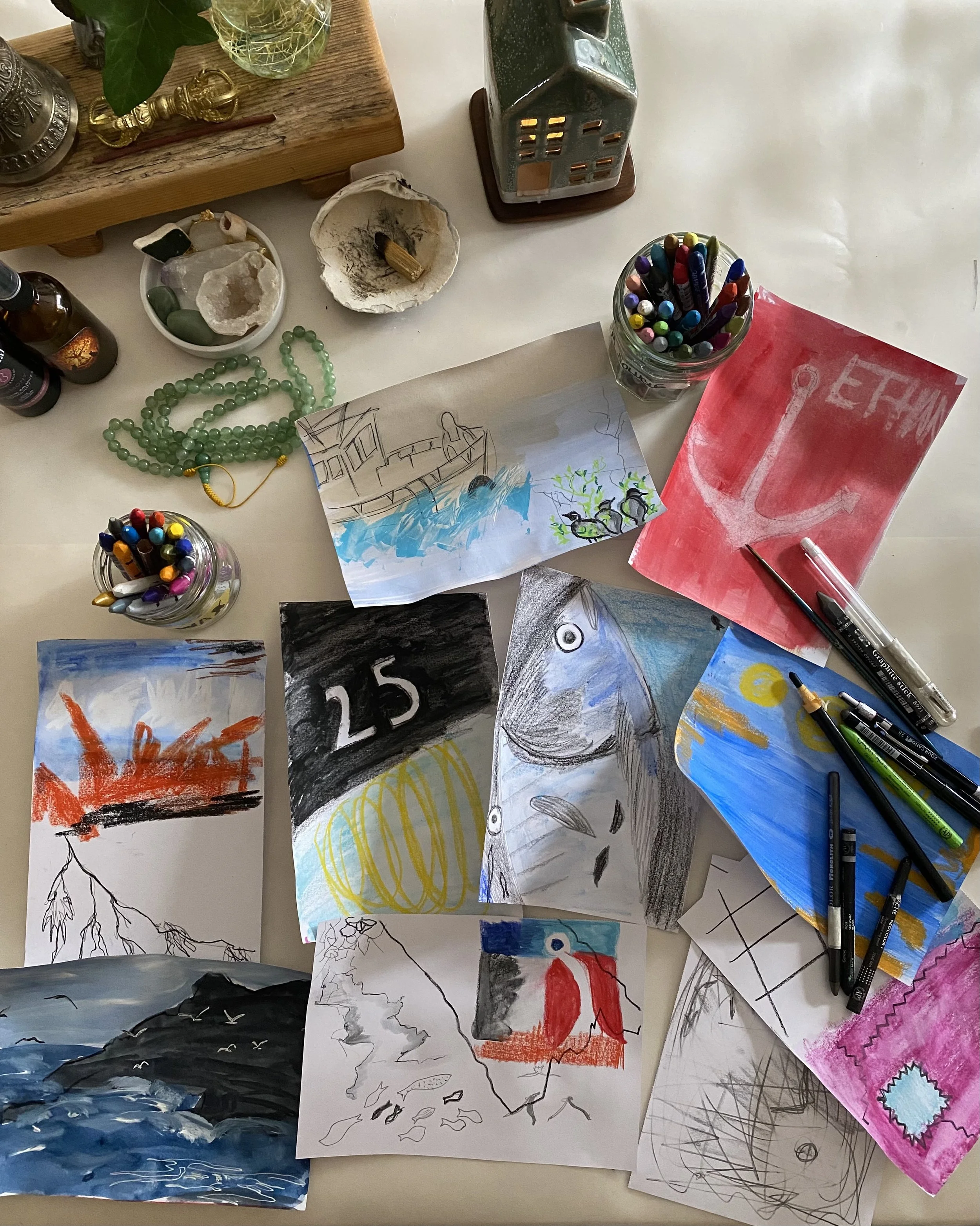
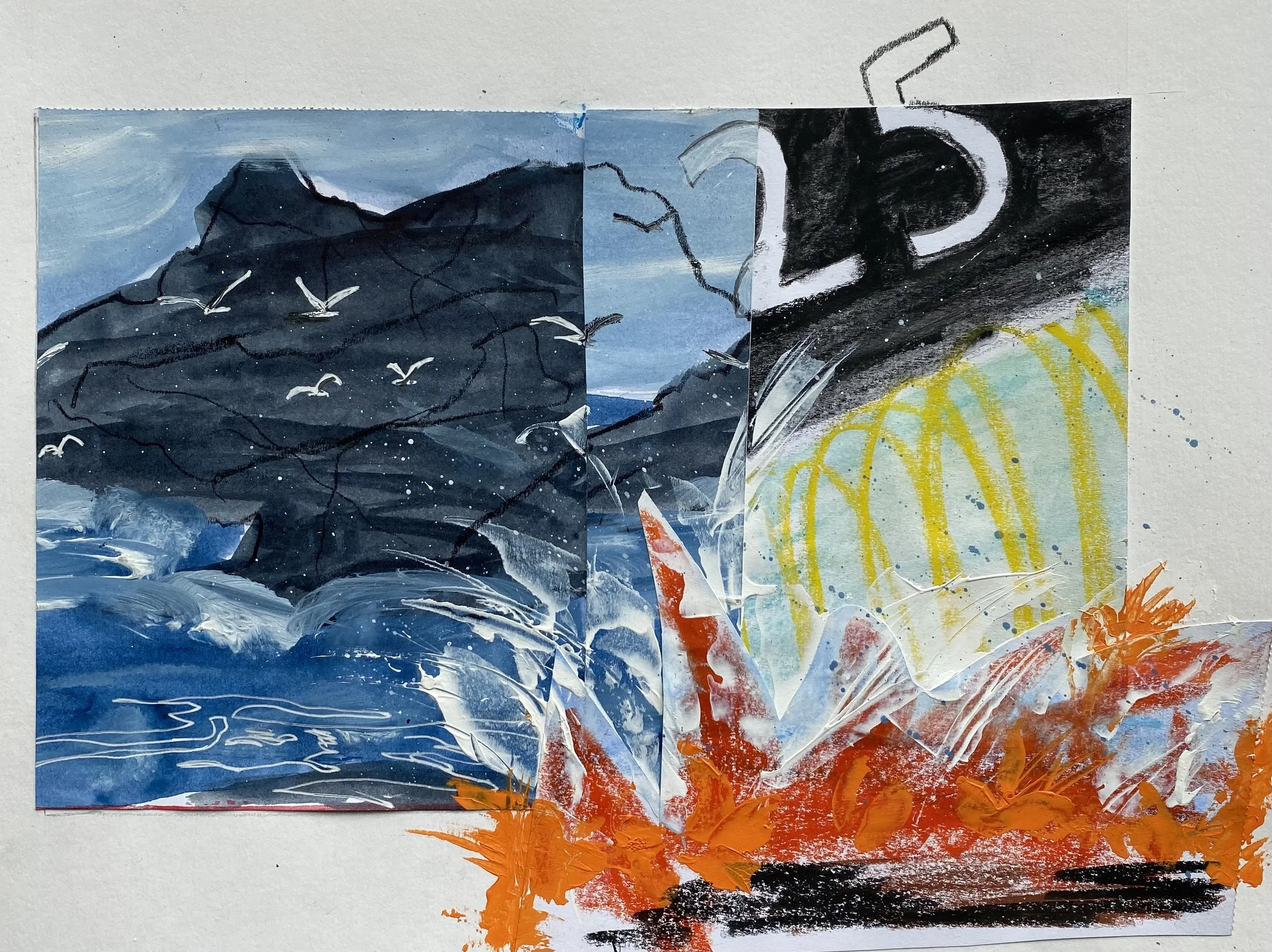
I created ten rapid, instinctive sketches, each one an attempt to capture something of the sea in a few gestural strokes. Some of these sketches evolved into collages. Cutting into them and rearranging fragments felt reminiscent of memory—how the sea never arrives whole, but in flashes: a line of foam, a shift in colour, a sudden horizon. The process was playful and truly enjoyable.
Coastal Thumbnails
From there, I shifted to something more structured.
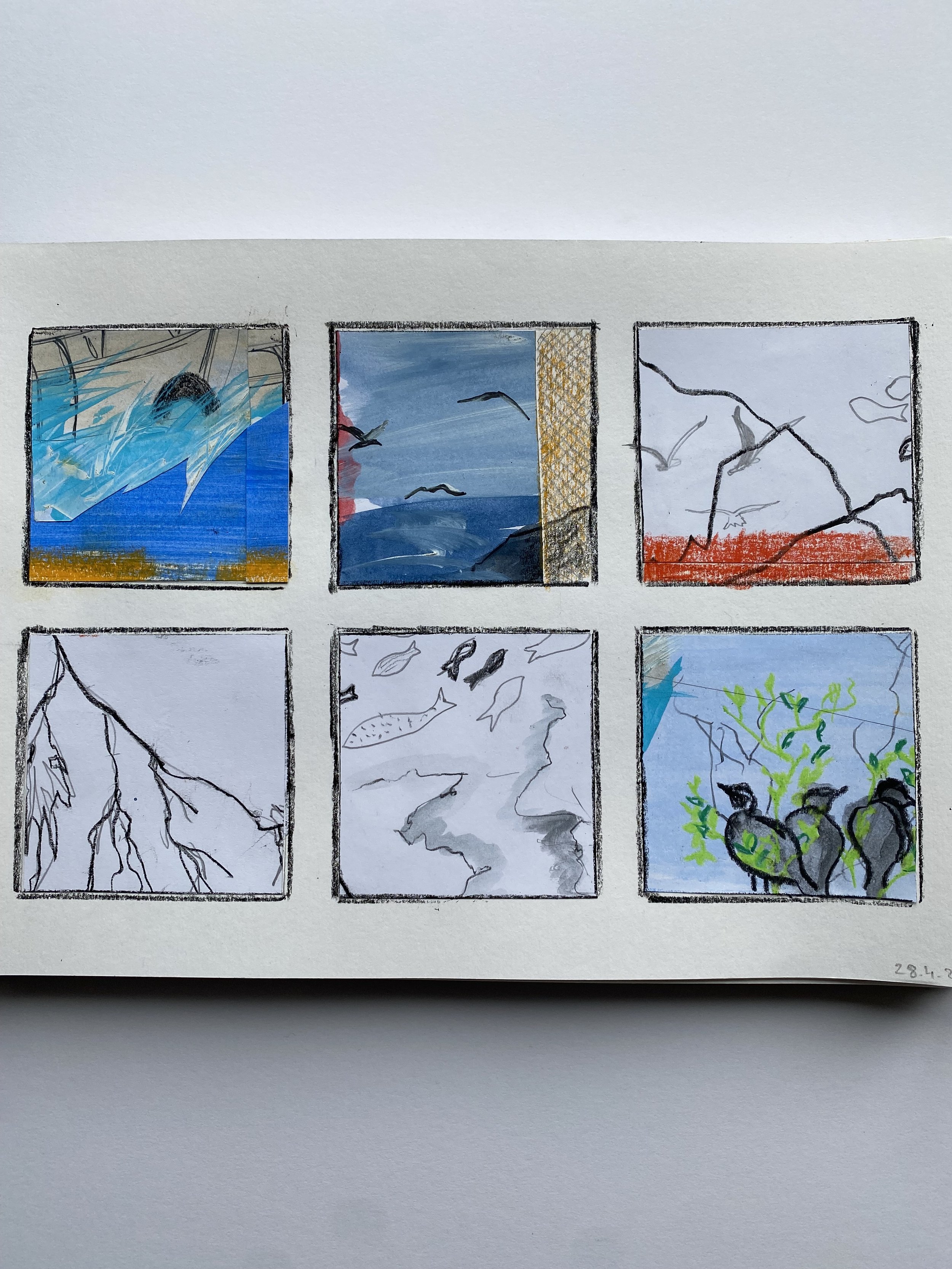
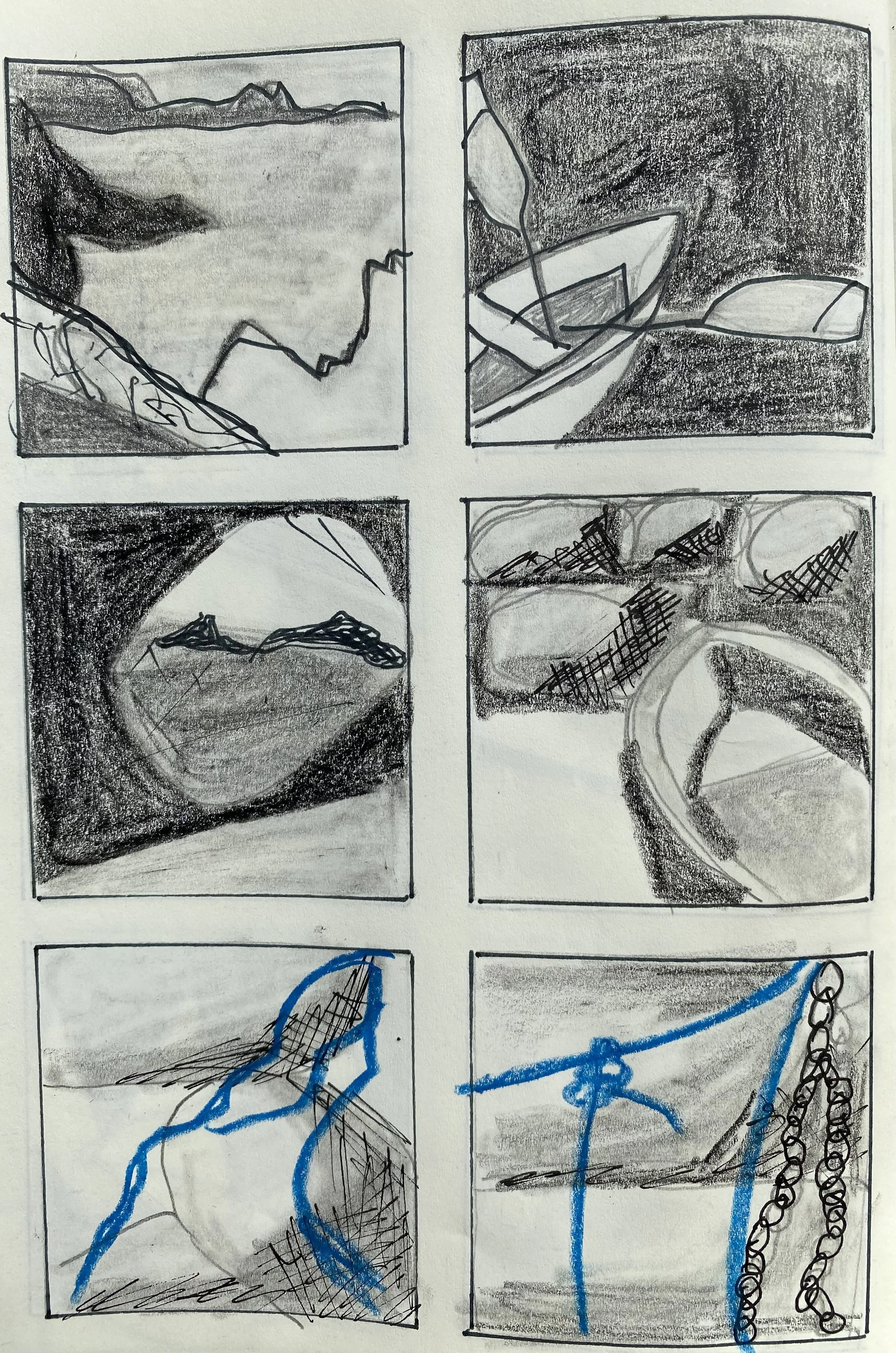
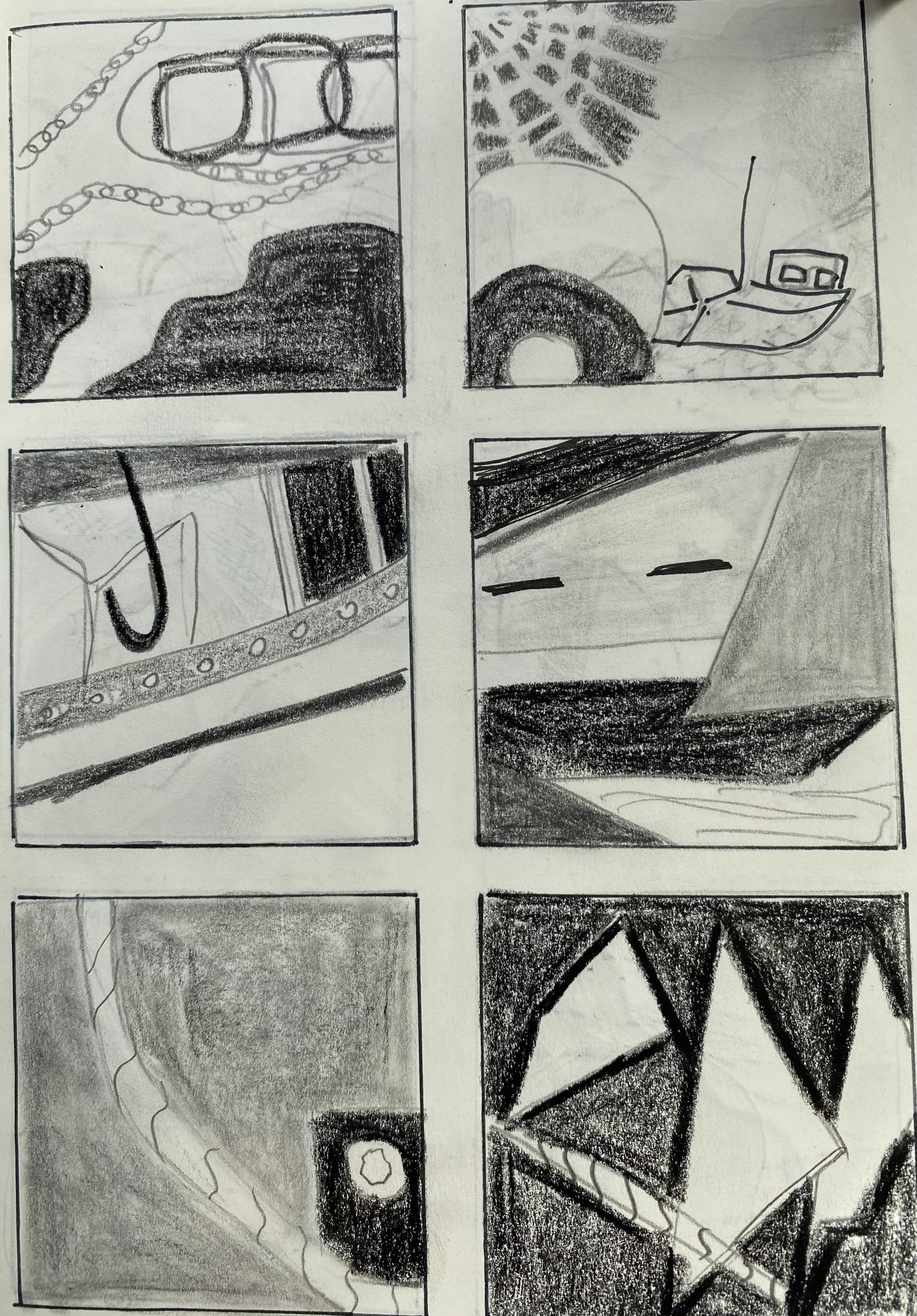
Using photographs that David Mankin provided in his online course “Remembering in Paint,” I created small thumbnail sketches focusing on line and shape. Stripping away detail revealed the underlying architecture of the coast, which feels like quiet maps that my mind uses to wander.
Weathered Surfaces: The Skin of Battered Boats
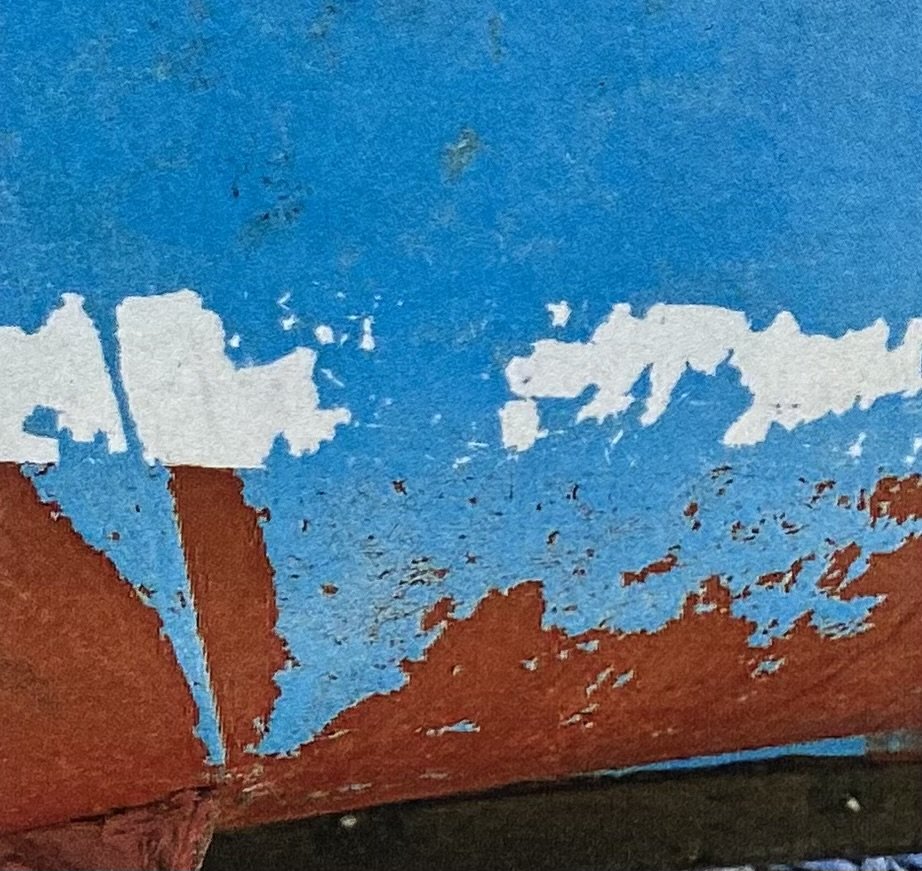
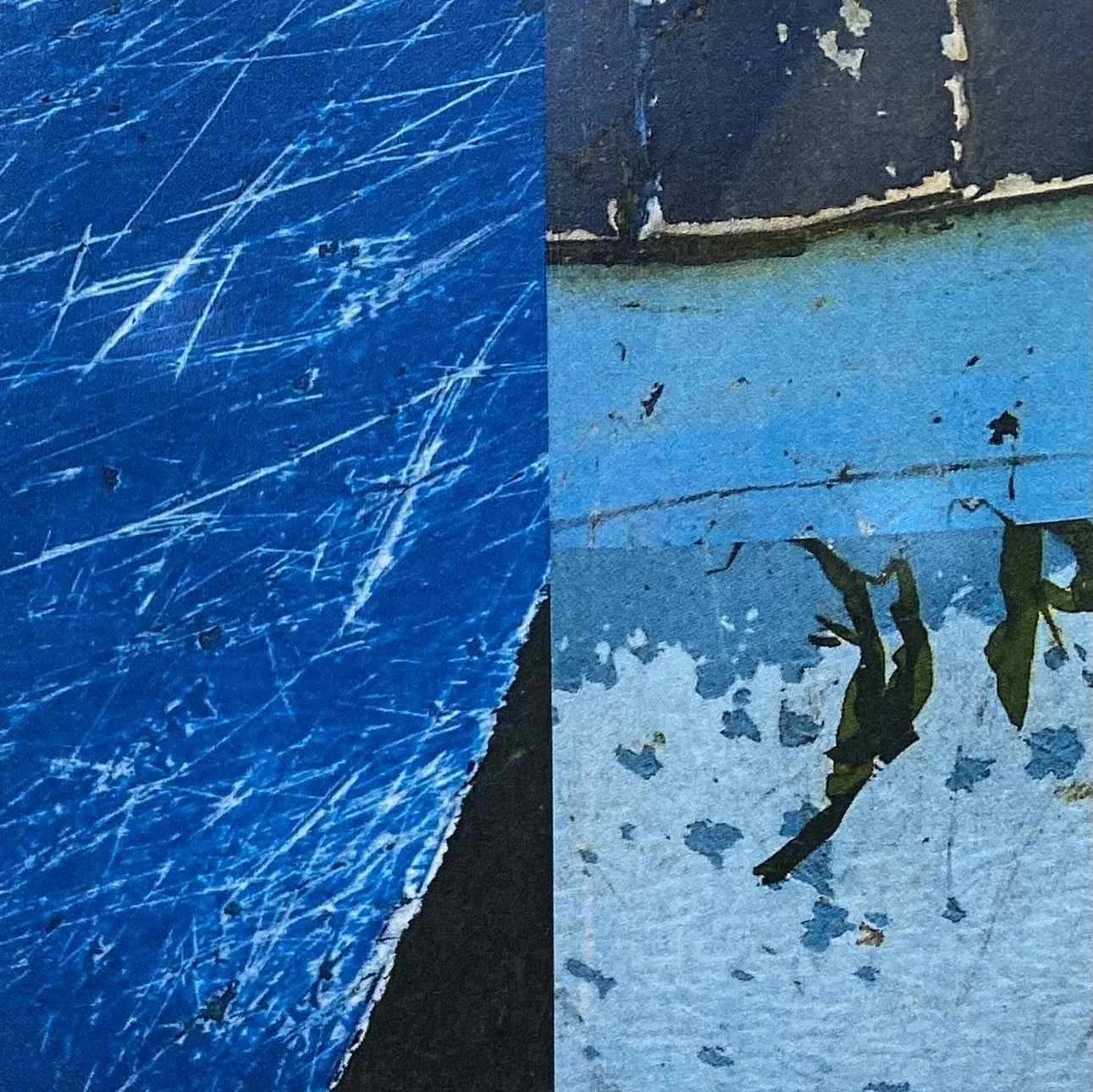
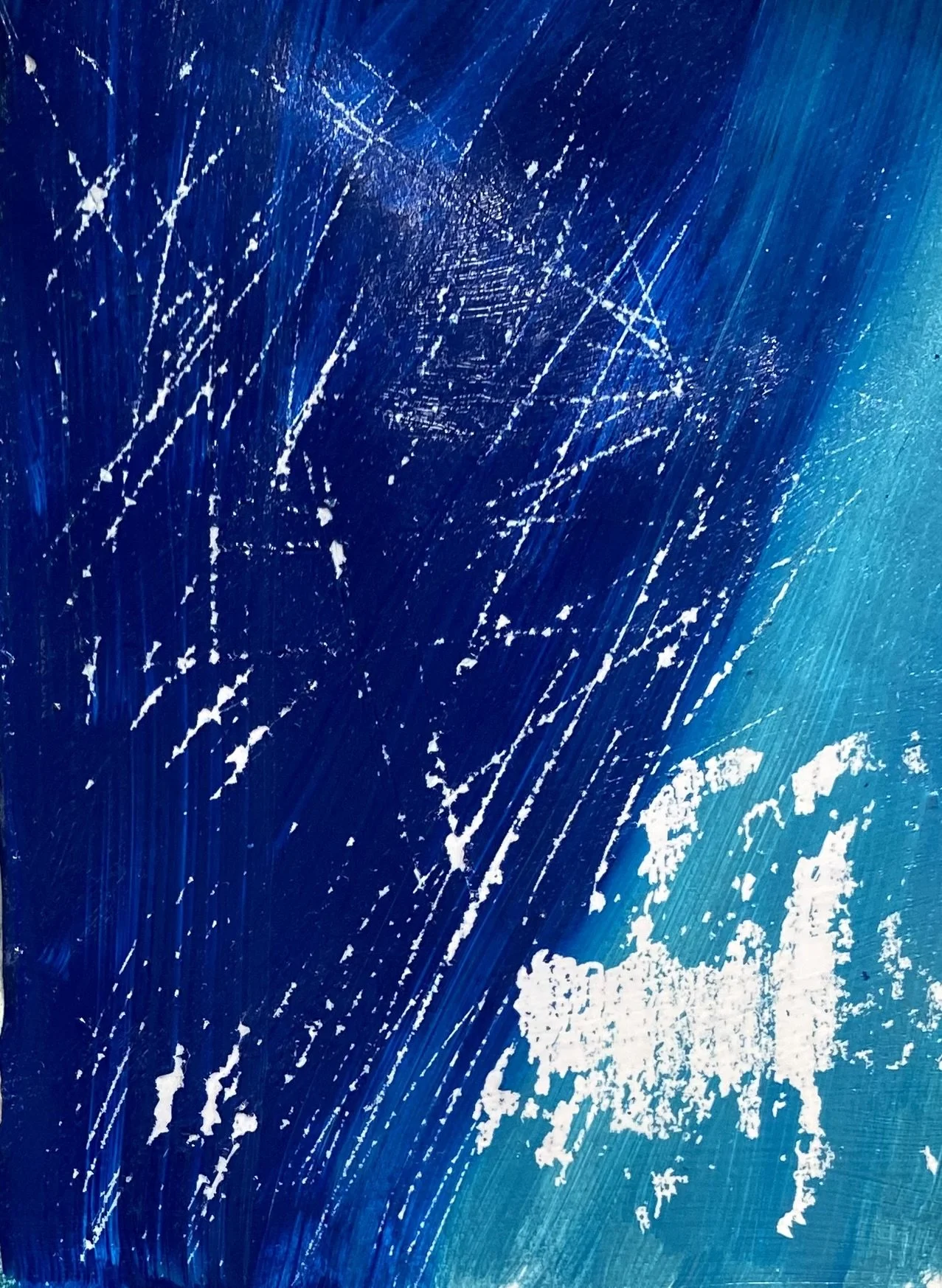
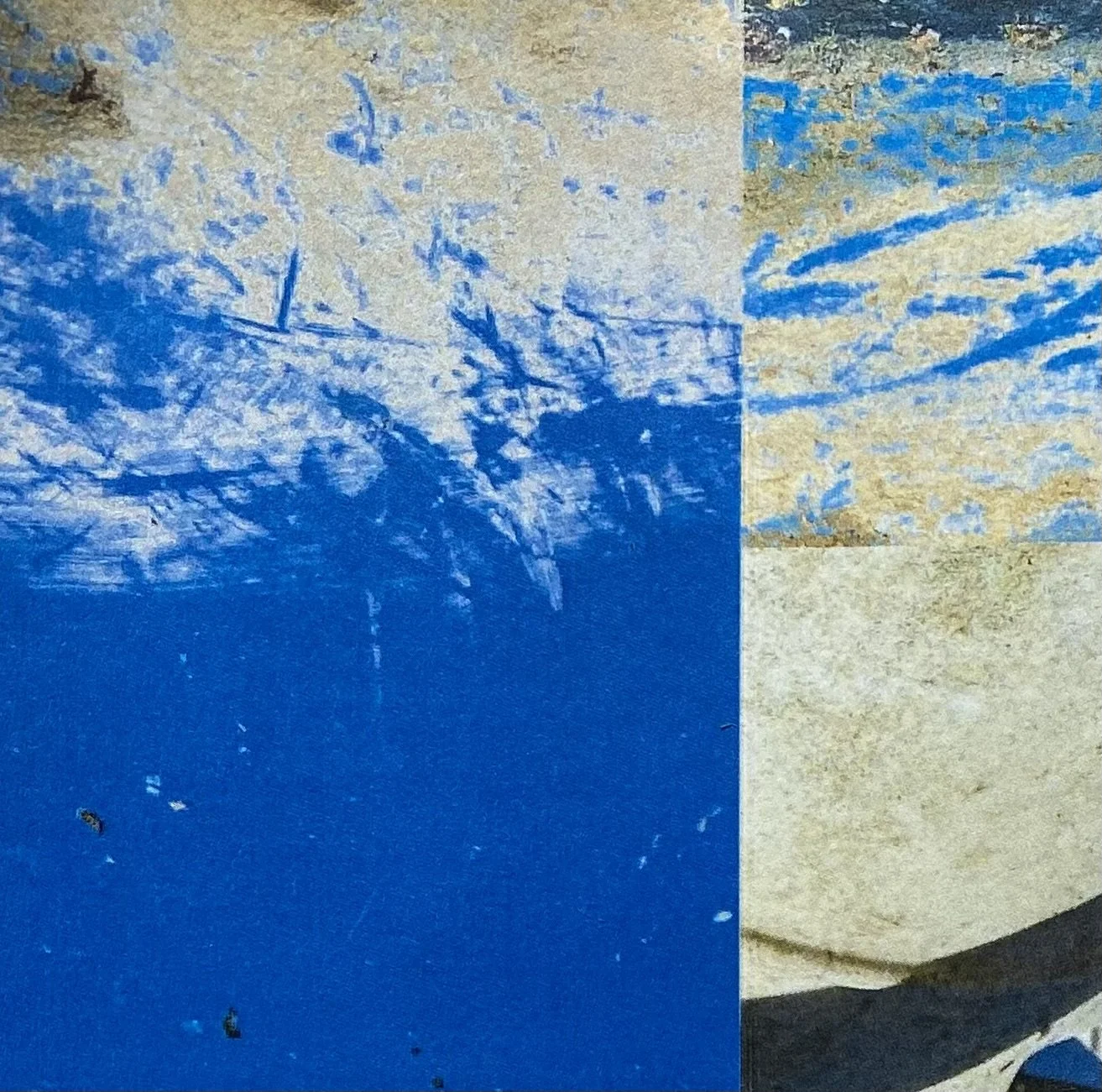
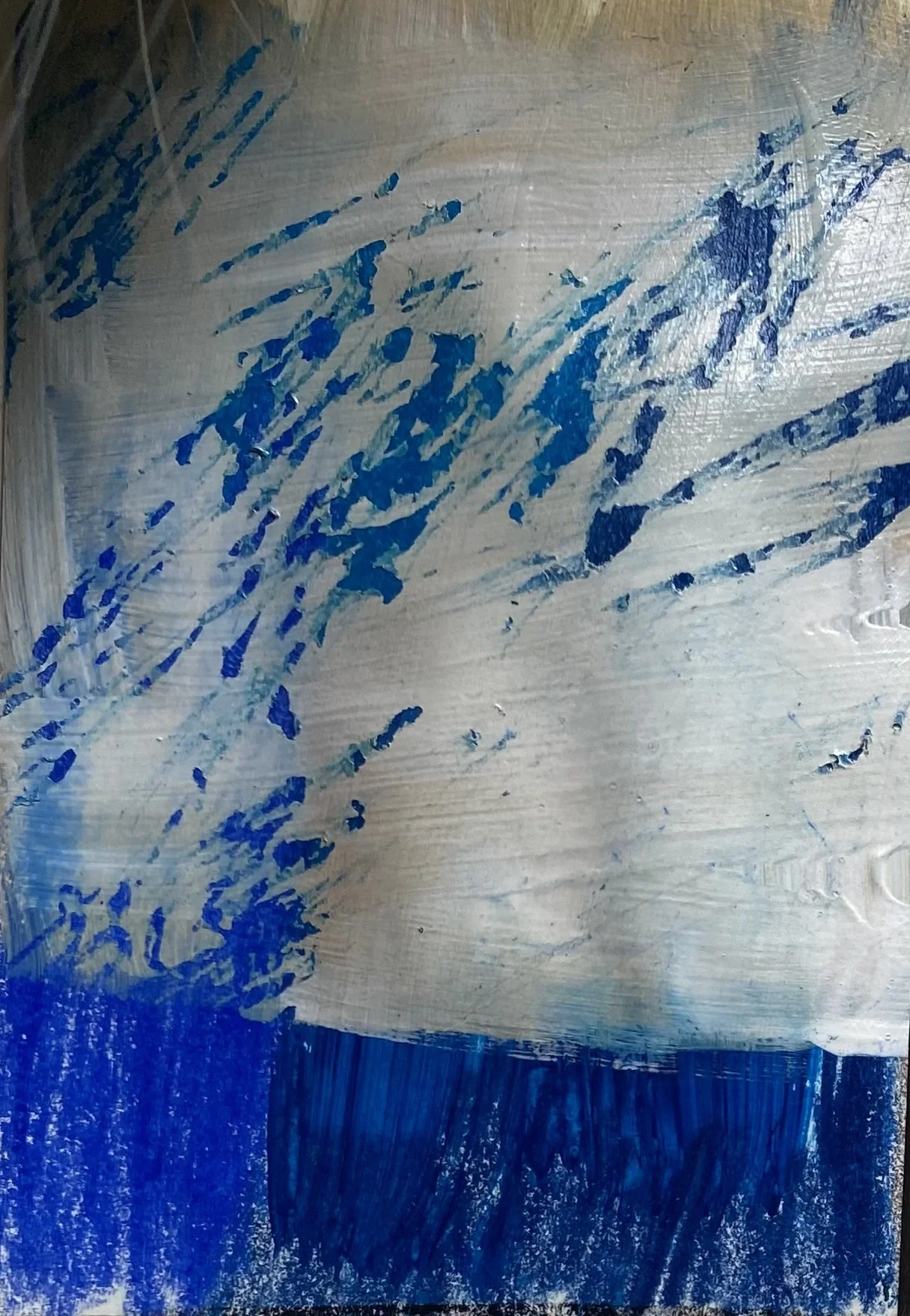
Working from some of David Mankin’s photo grids, I chose close-up images of boat surfaces marked by time, salt, and use.
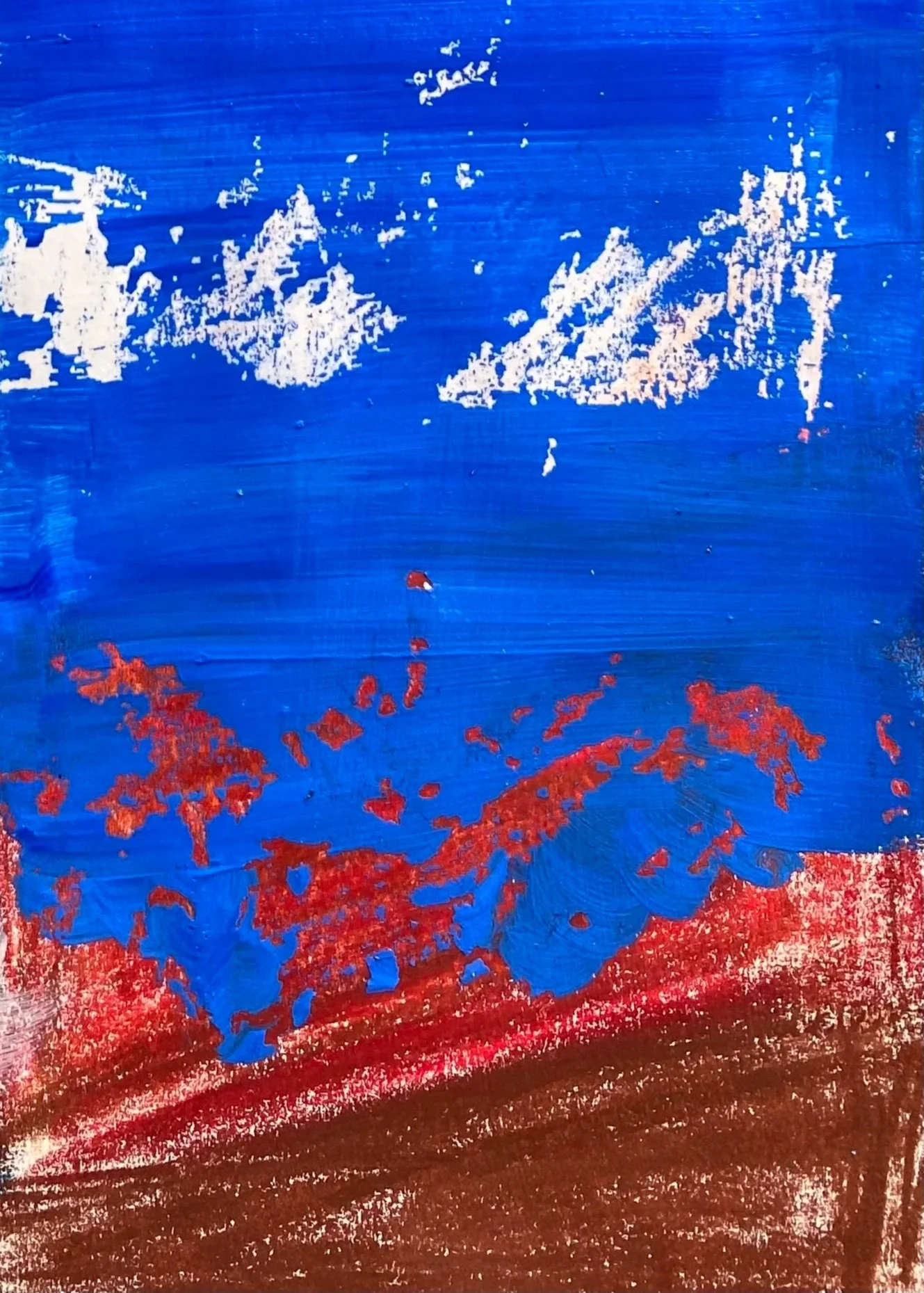
Peeling paint, scratches, and layers revealed and lost again feel as vital to the seascape as the water itself. I experimented with recreating that distressed texture using wax crayon as a base, then layering it with acrylic paint, and disrupting it: lifting paint away with tape and scratching into the surface with sharp tools. The results are interesting but still exploratory. They capture some of the wear and erosion, but they are not quite there yet. For more resolved work, I know I will need to move toward more archival methods—building up layers of acrylic and sanding them back.
Anchor Studies: Above and Below the Sea
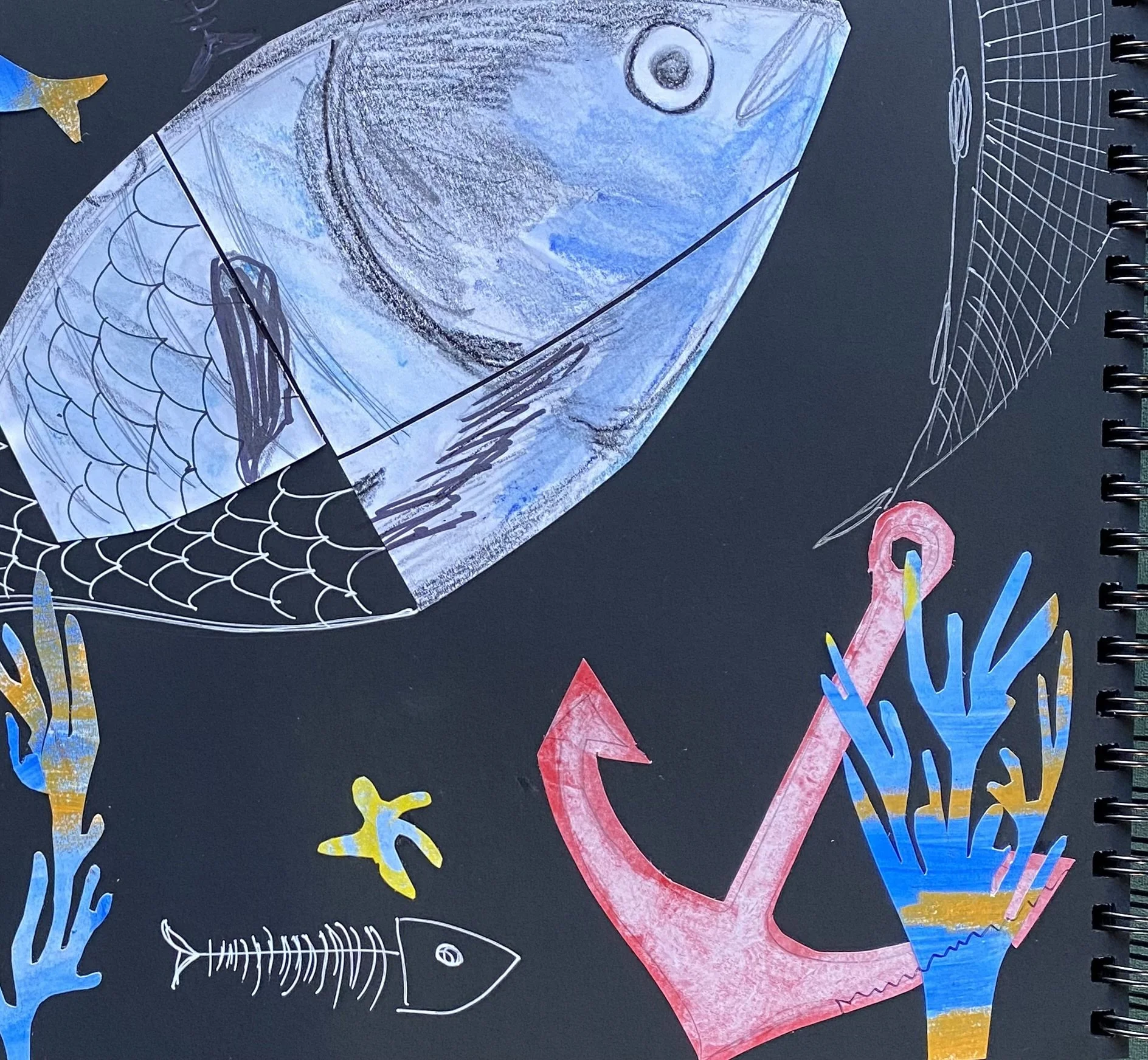
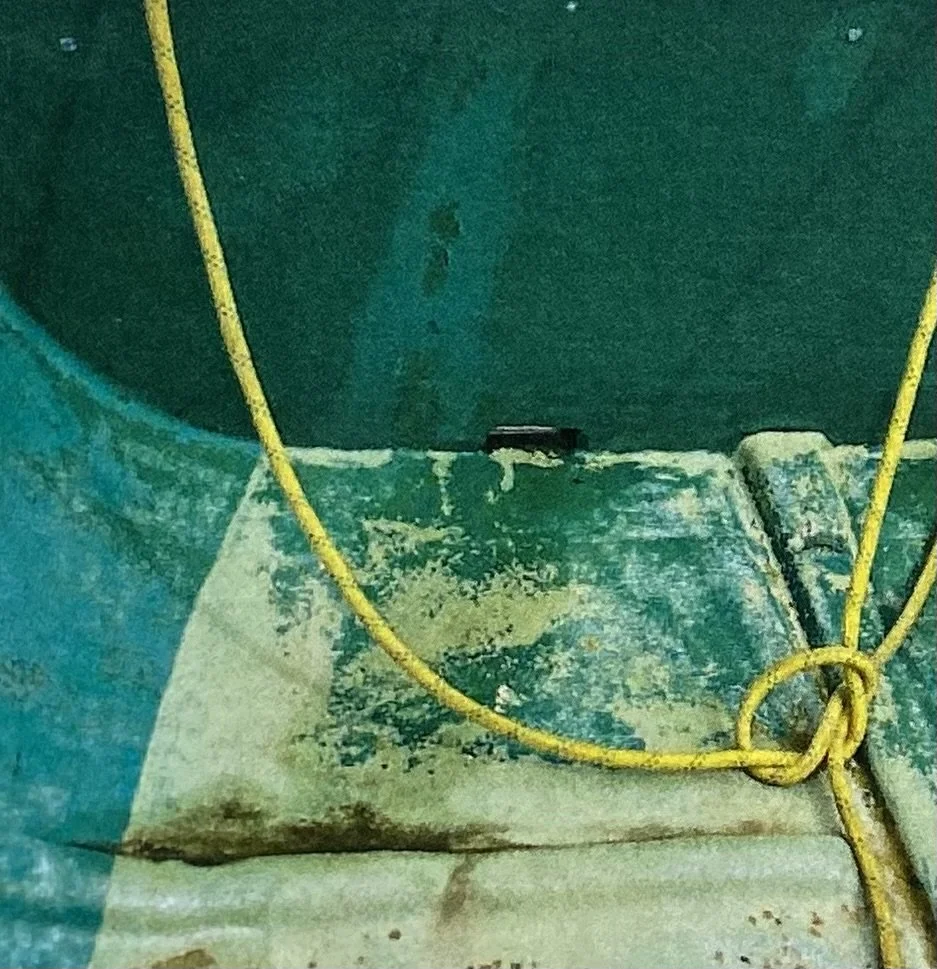
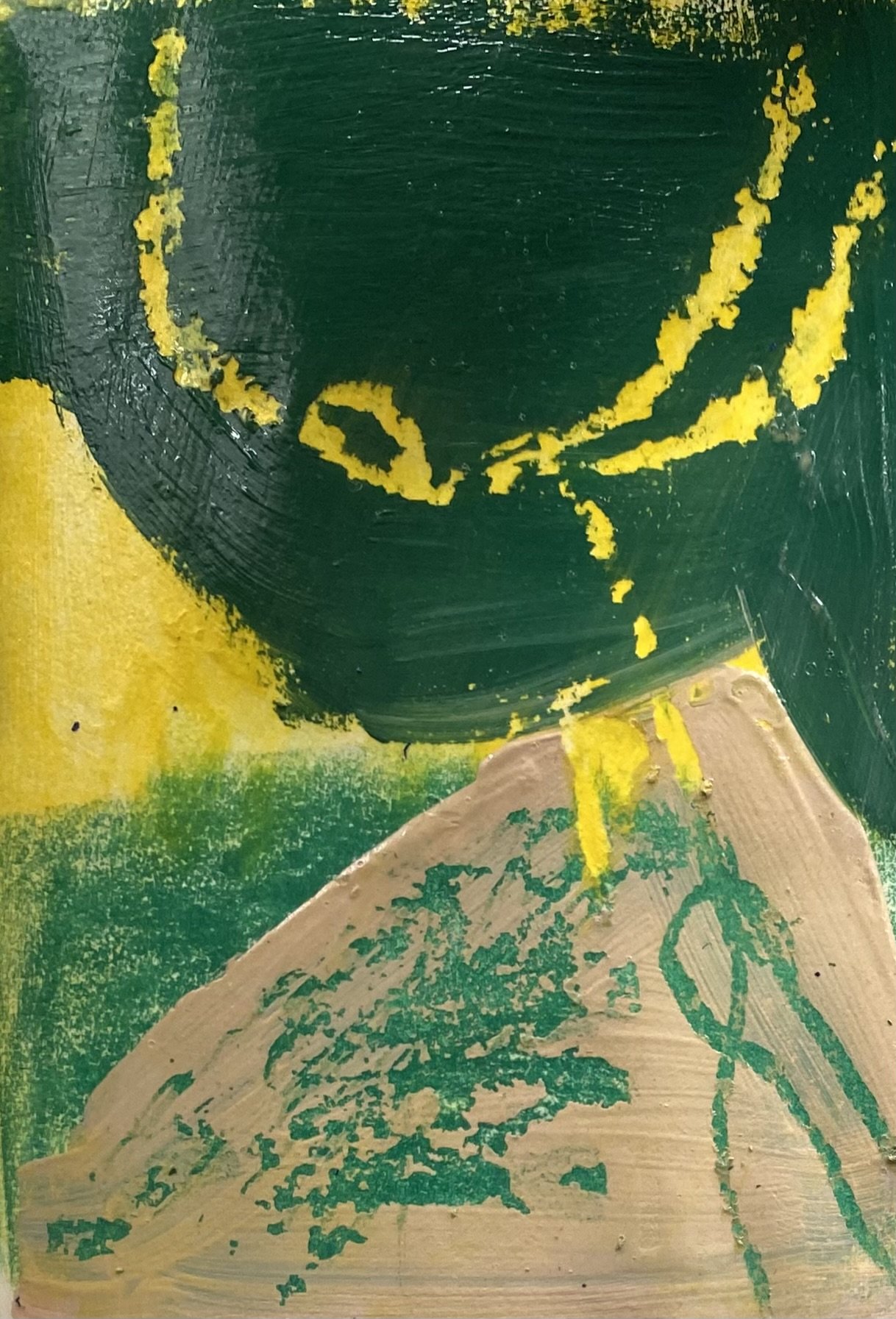
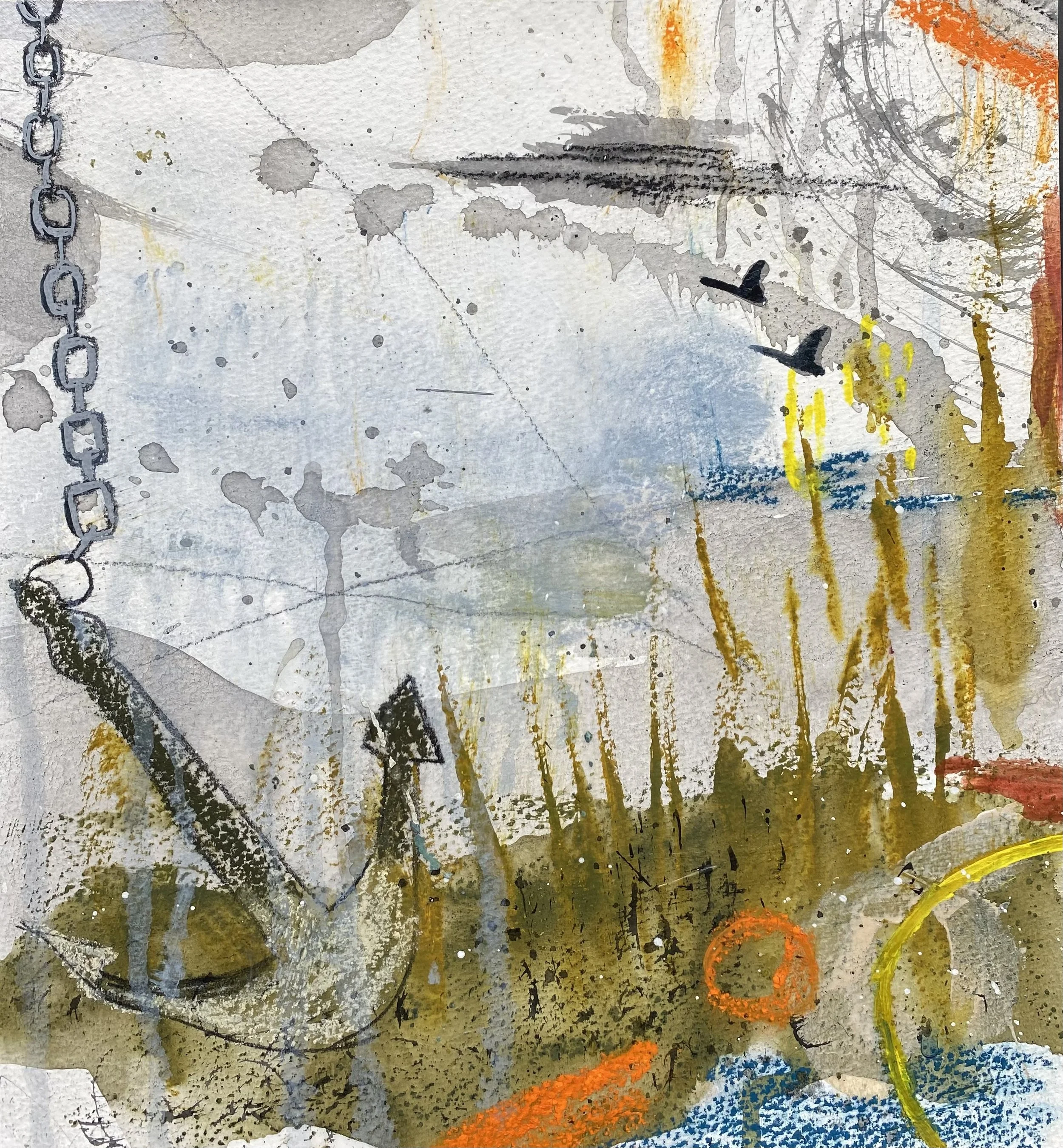
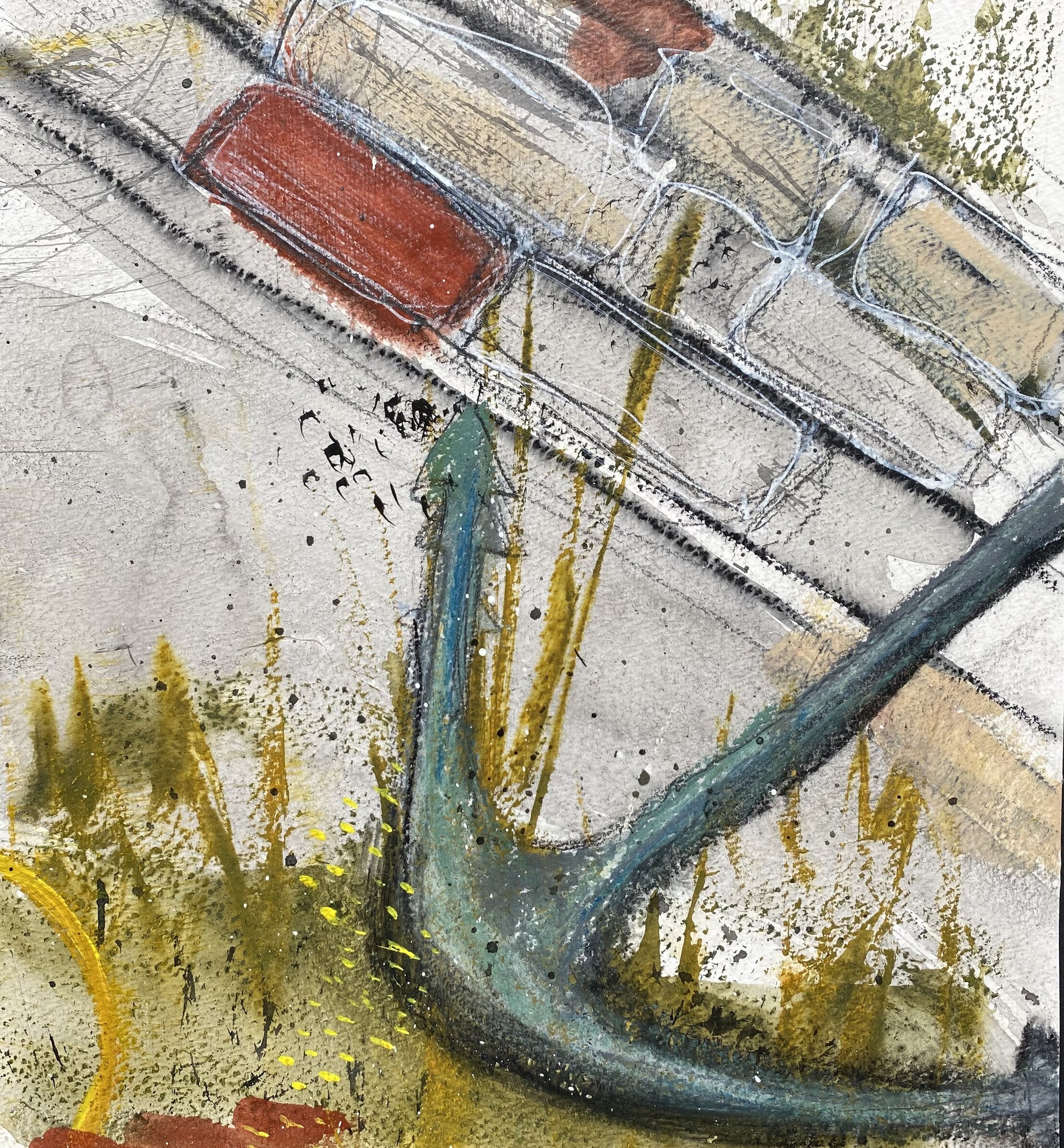
Continuing this thread, I made a couple of small studies centred around an anchor from a photograph I took some years ago.
There is something about an anchor that resonates with me: an object designed to hold, to resist movement, that exists both in the underwater world and is tethered to the surface above.
I explored the idea of submersion—that gentle, murky, light-filtered quality of being beneath the water with greens, browns, and obscured forms. I also introduced elements from the world above: the ghostly images of birds, the geometry of a stone wall, and fragments of the landscape above water.
I love this juxtaposition. The anchor belongs below and yet connects to the surface. The birds belong above, and yet their reflections reach down. The wall stands on the land, and yet the sea is always working at its base. There is always a conversation happening between these two worlds.
I am looking forward to my en plein air adventure next week. The anticipation of standing in a place I love, of letting the cold air, the sound of the water and the smell of the harbour do their work.
I plan to take lots of photographs, fill pages with sketches, and activate all senses: the feel of the wind, the sound of seagulls, and the unique quality of light on the water. All of it will come home with me, and some will continue to inspire me in the weeks ahead.