
Monochromatic exploration
I have always been drawn to black-and-white studies. There is something inherently dramatic about reducing an image to light and shade. Without colour, everything becomes more deliberate. Edges sharpen, contrasts deepen, and the composition begins to feel almost theatrical.
Part of this fascination comes from my admiration for the work of Eric Casey Baugh (www.ecbaugh.com). Baugh uses a minimal, often monochromatic palette to create such powerful, emotive images. There is a dramatic quality in his work. With just a few shapes and carefully controlled values, he can express so much.
Working in monochrome often feels like a kind of dialogue. You make a mark, adjust a tone, deepen a shadow—and suddenly there’s a presence looking back at you.
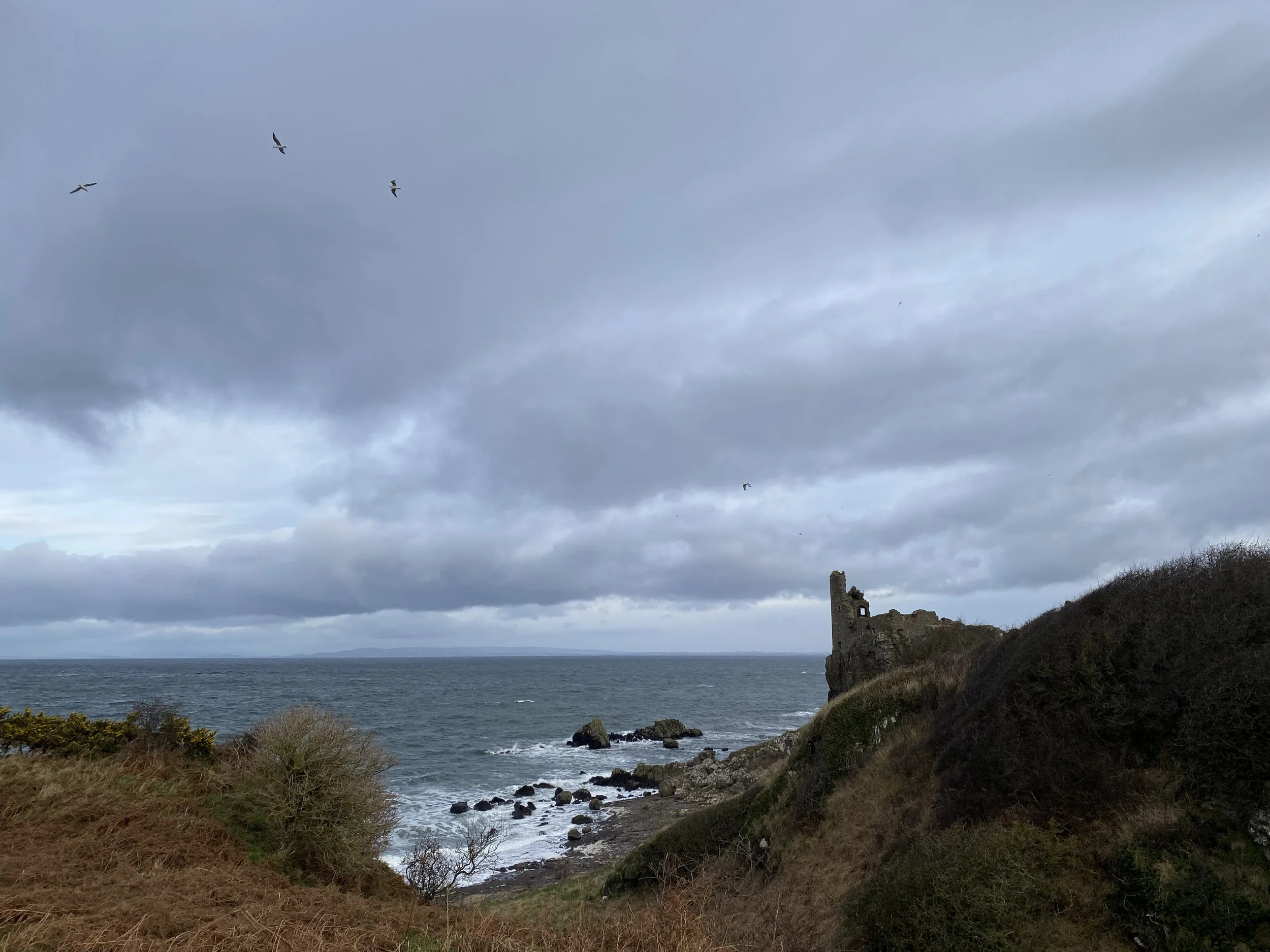
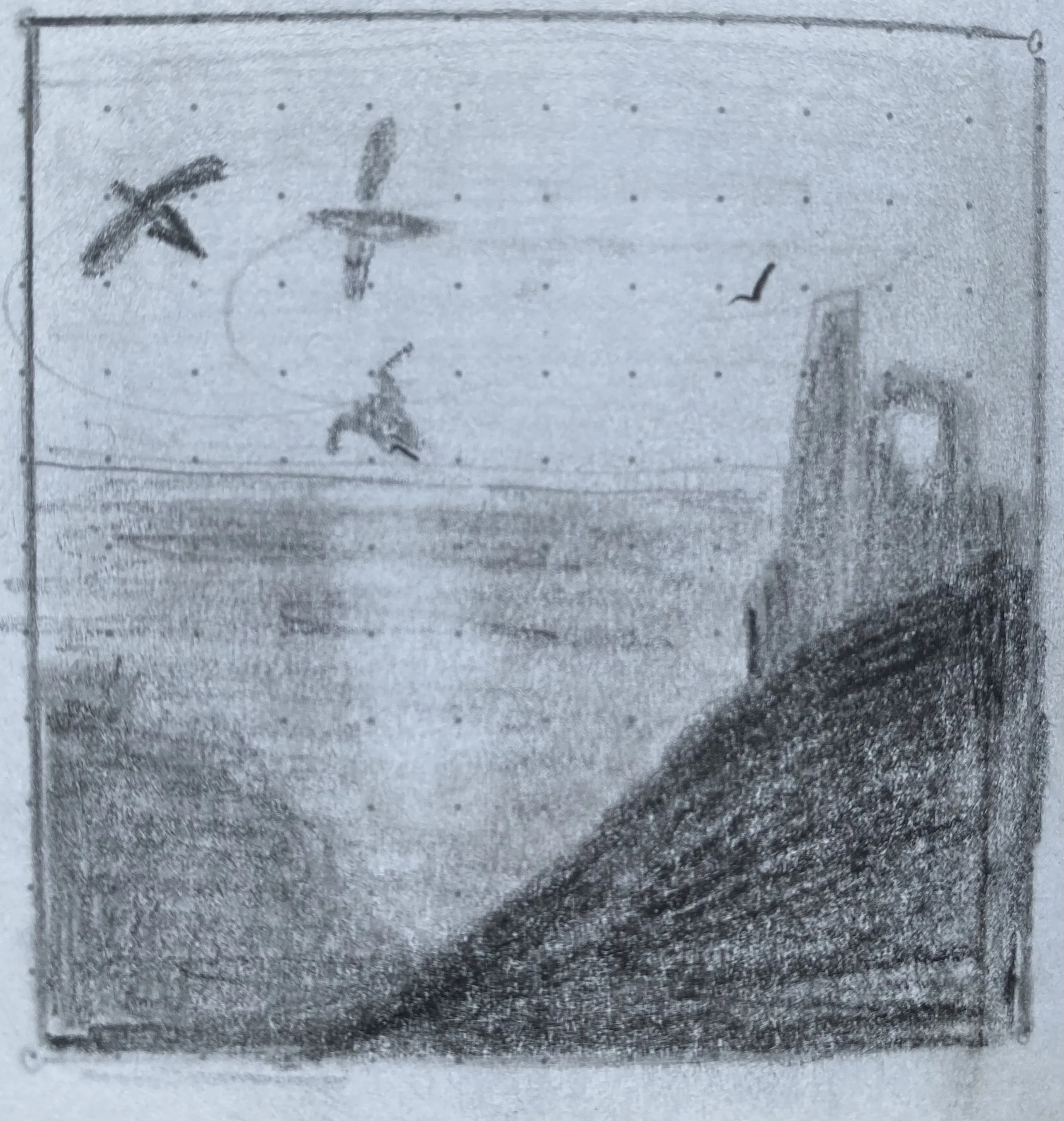
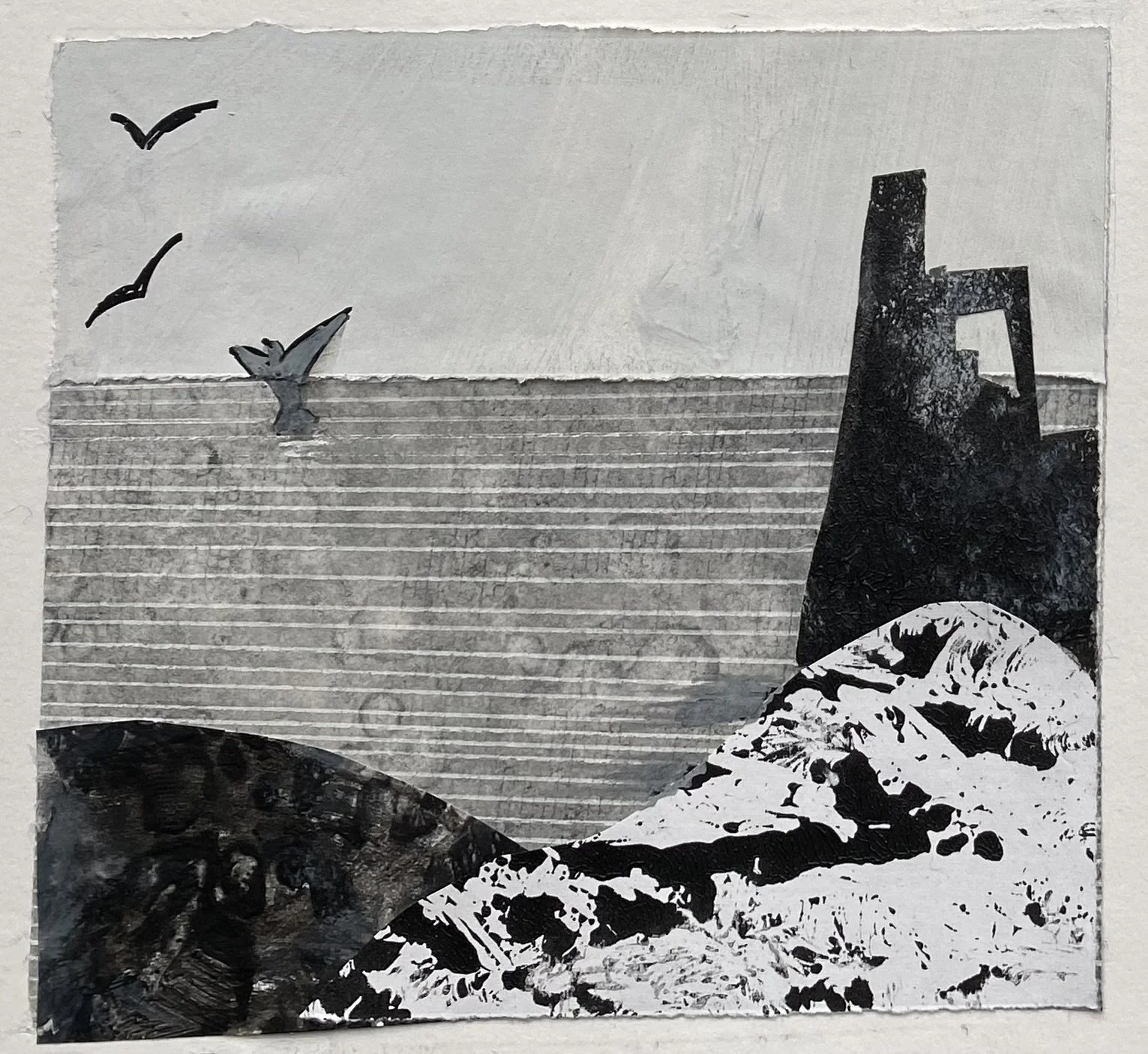
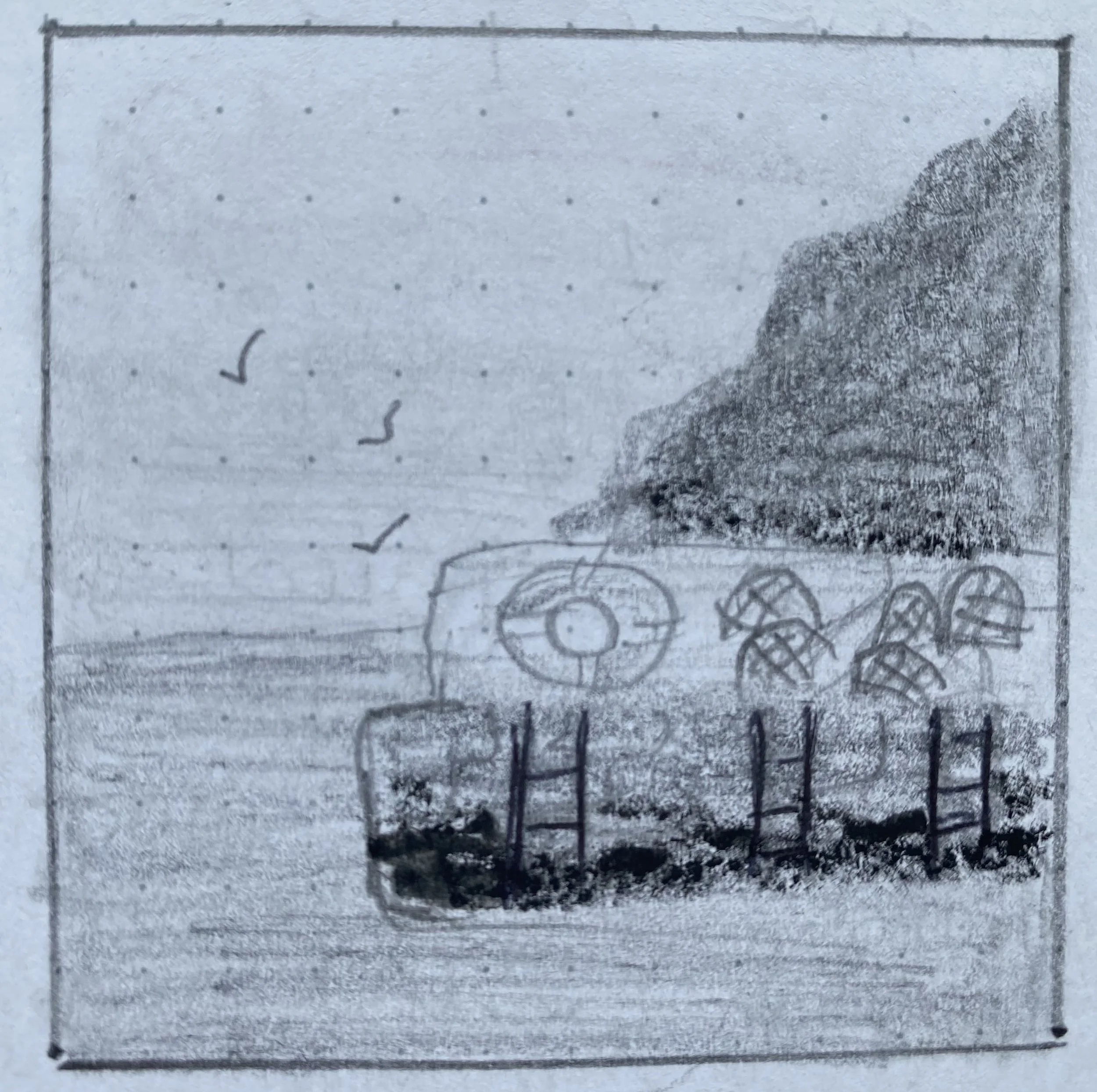
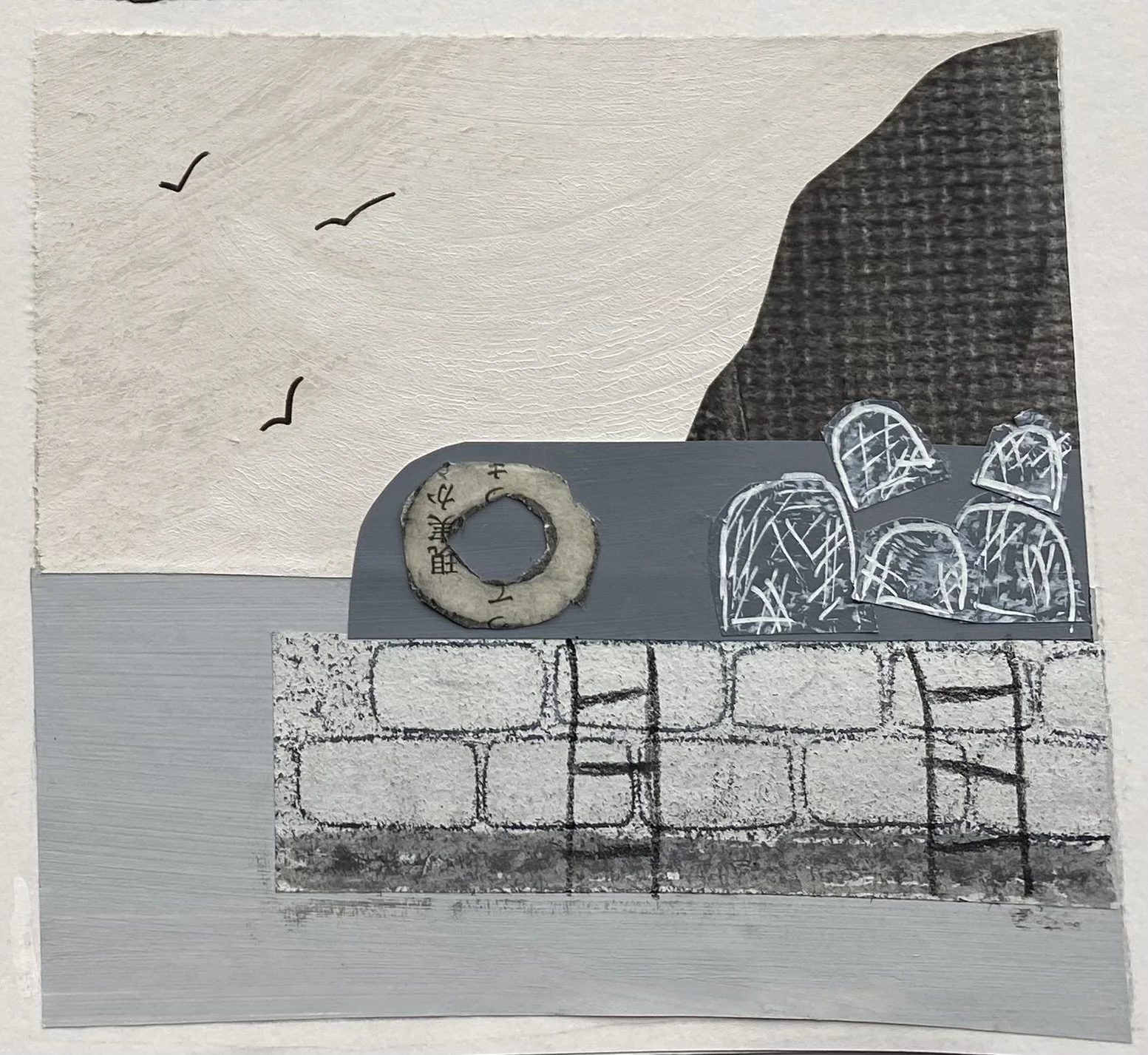
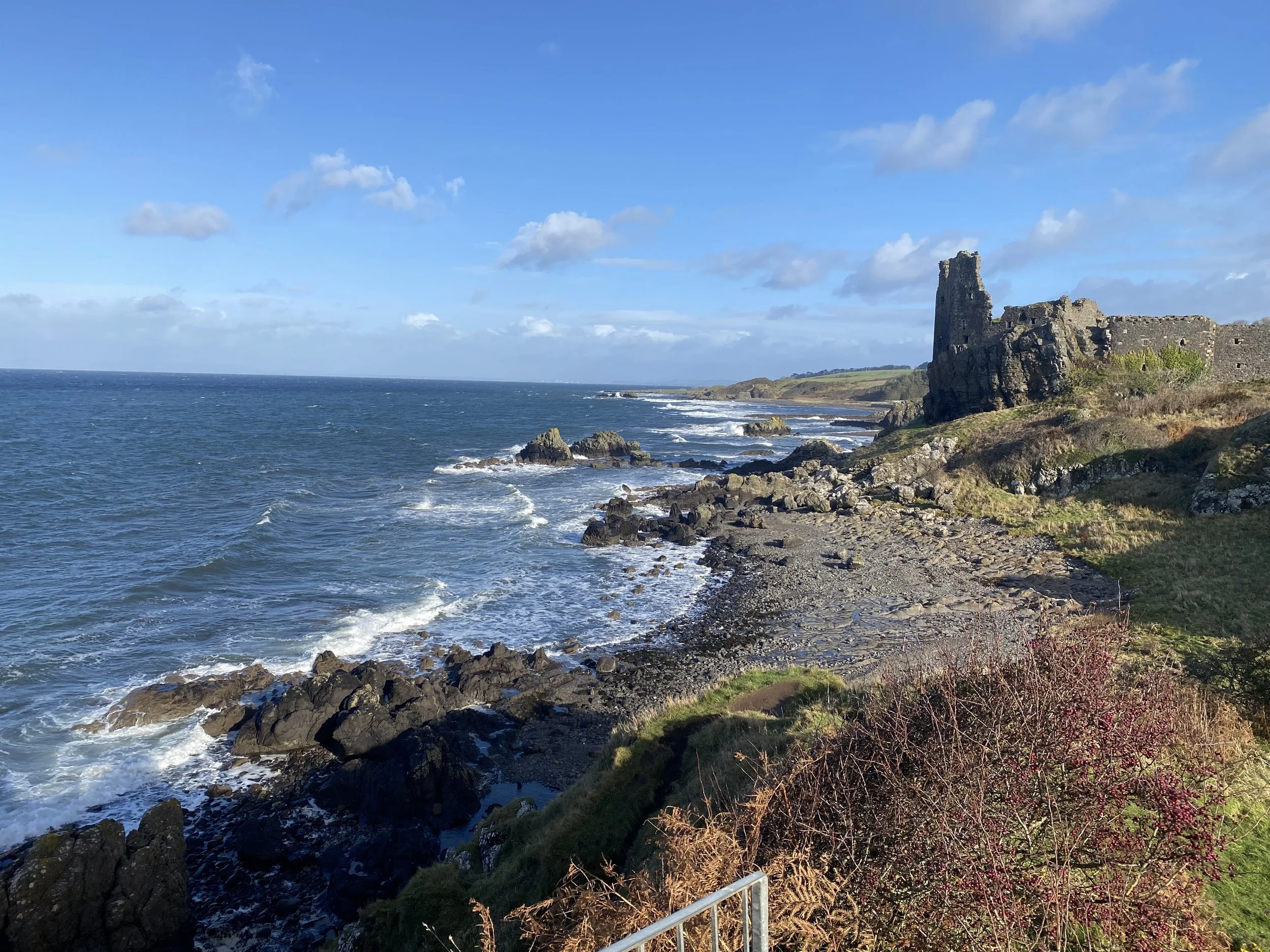
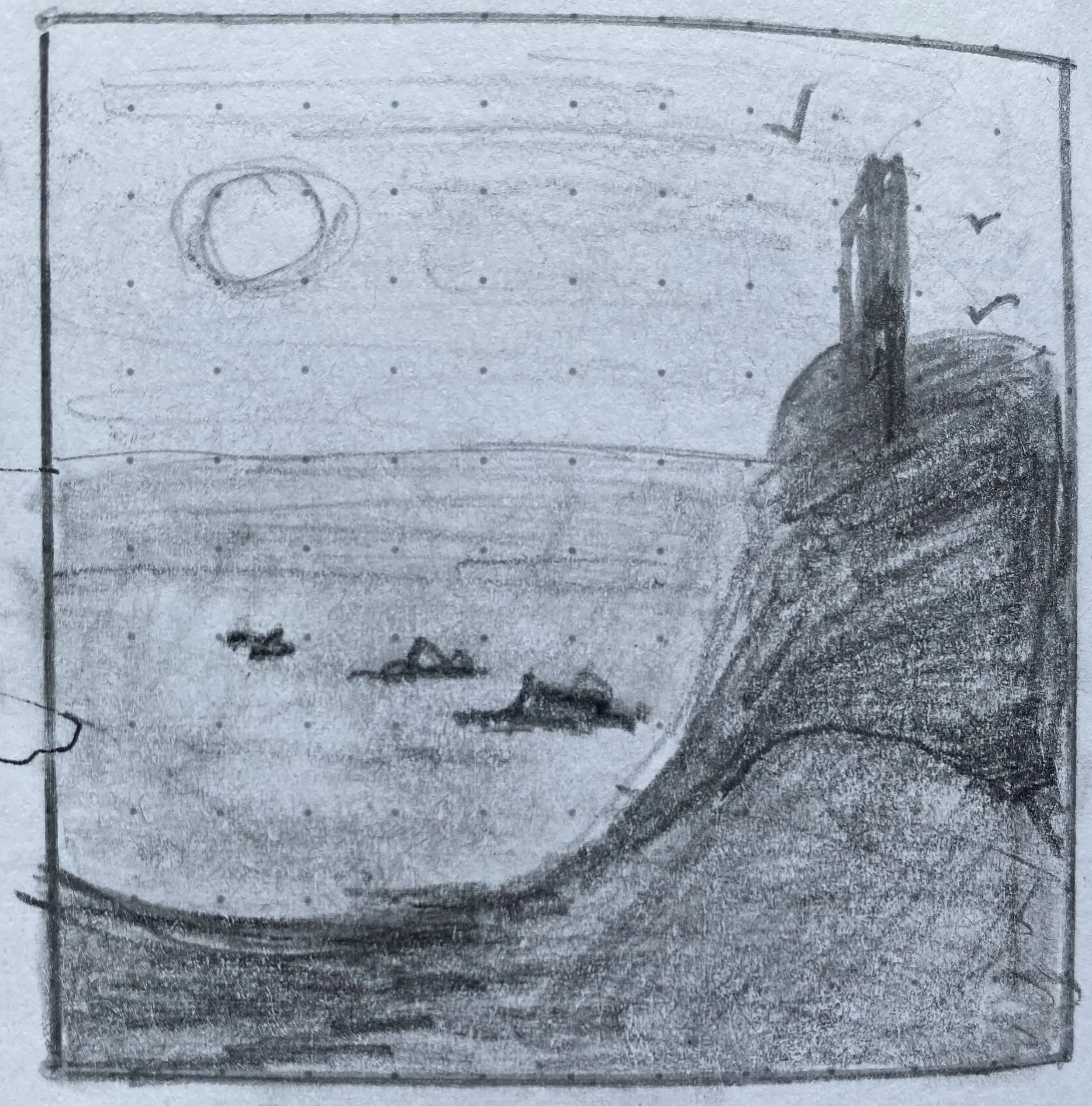
Dunure - From Photograph to Simplified Sketch and Collage
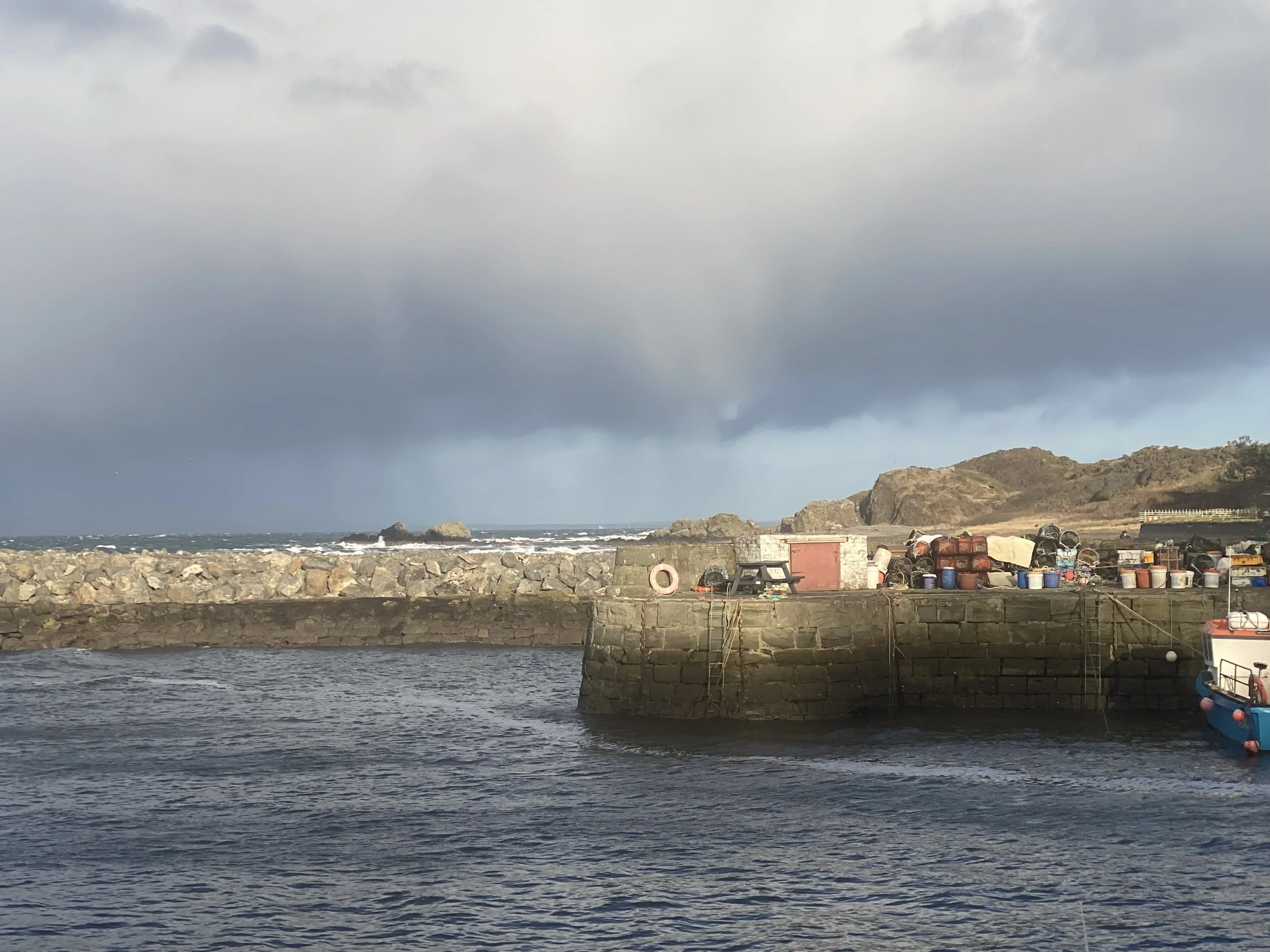
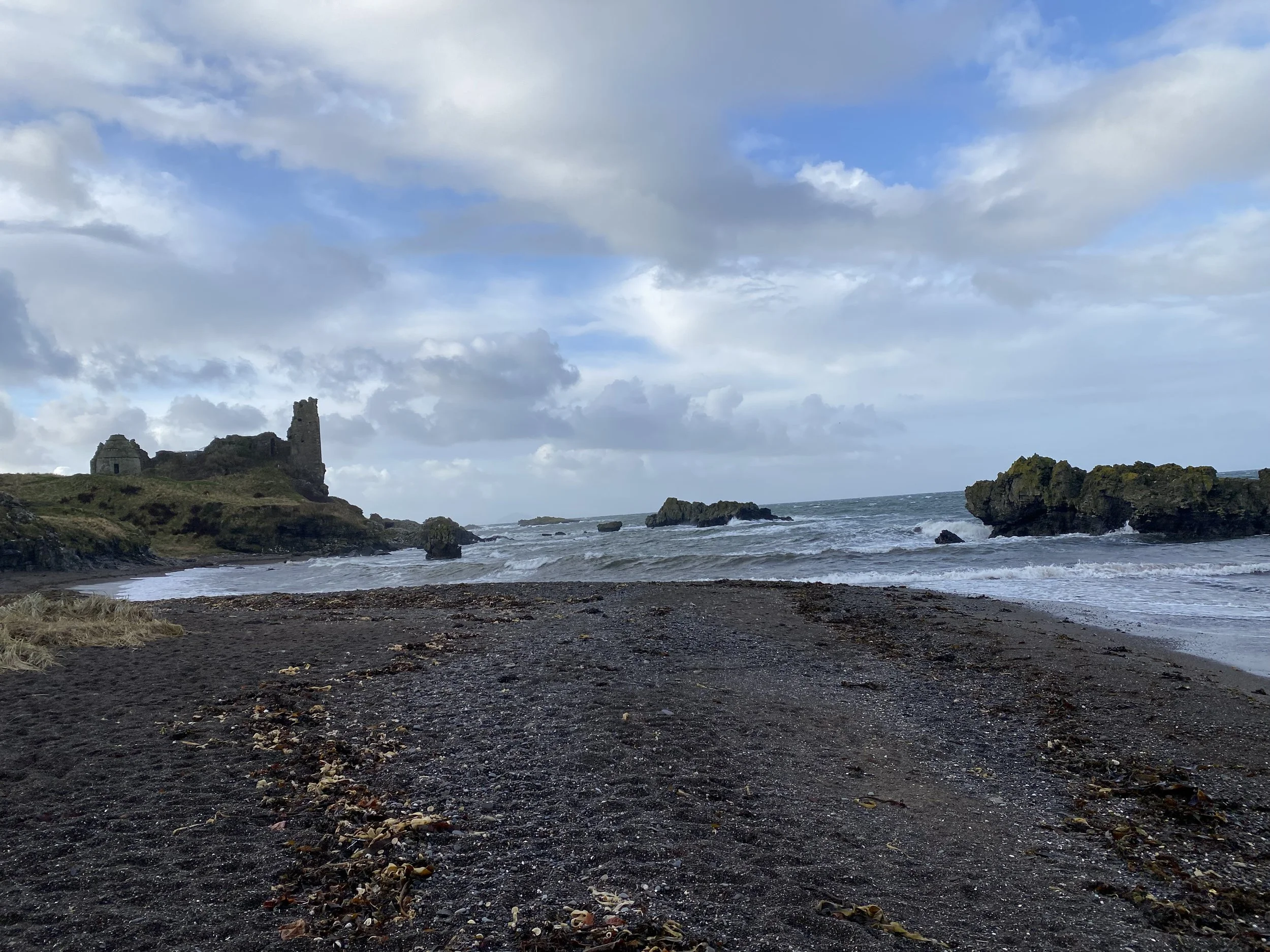
There is something endlessly captivating about the raw beauty of Scotland’s western coastline, and Dunure is one of those places that keeps pulling me back. With its quiet harbour, rugged shingle beach, and the haunting silhouette of Dunure Castle, it offers a landscape that feels both timeless and deeply atmospheric.
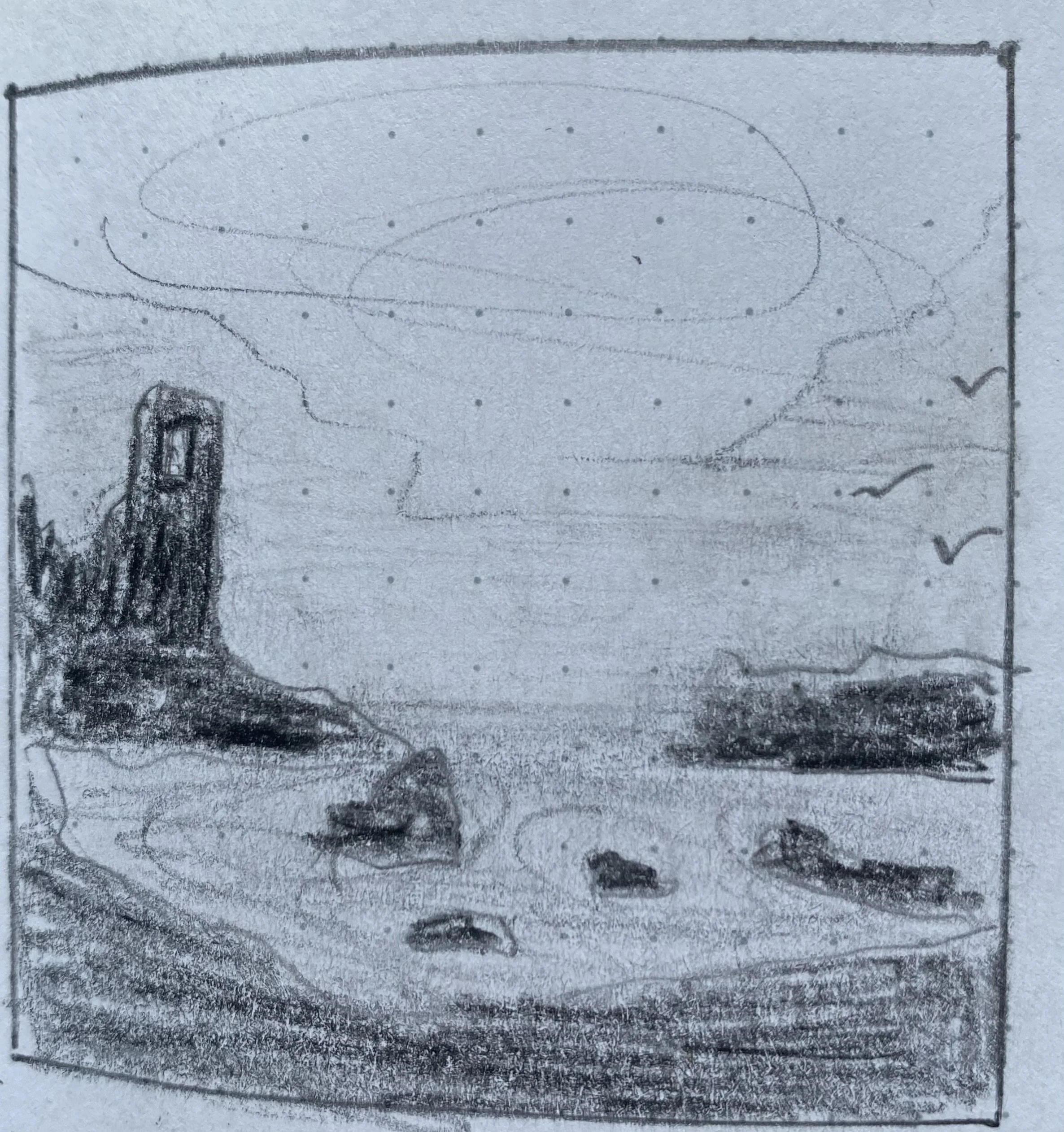
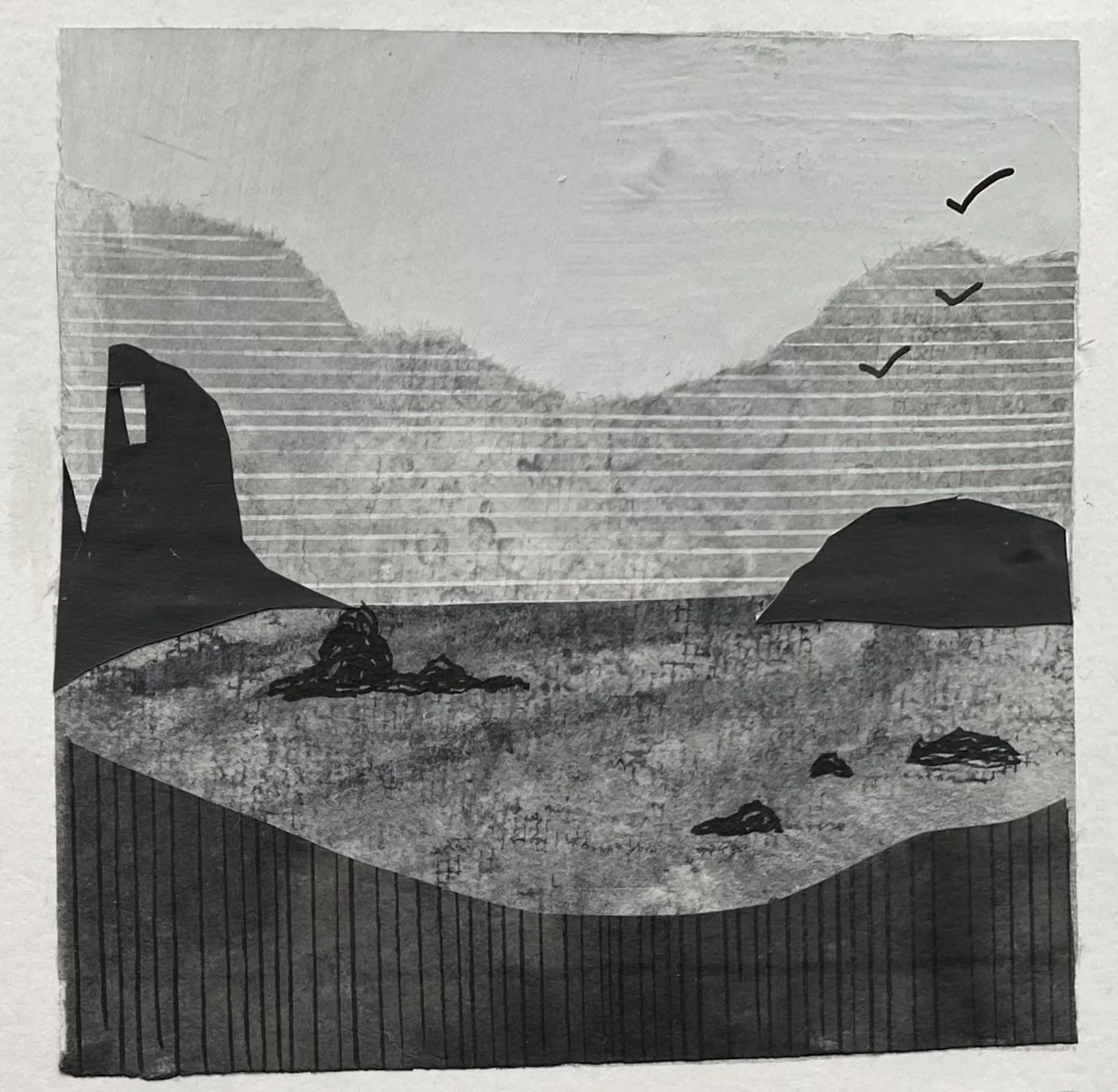
I love translating the simplified sketches I make on-site into four-value monochrome collages, distilling the landscape into its essential shapes and tonal relationships.
The Scottish coastline continues to be a constant source of inspiration for me—its changing moods, subtle or dramatic tonal variations, and the sense of an open space always offer something new to interpret.
Exploring Contrast in Imagined Landscapes
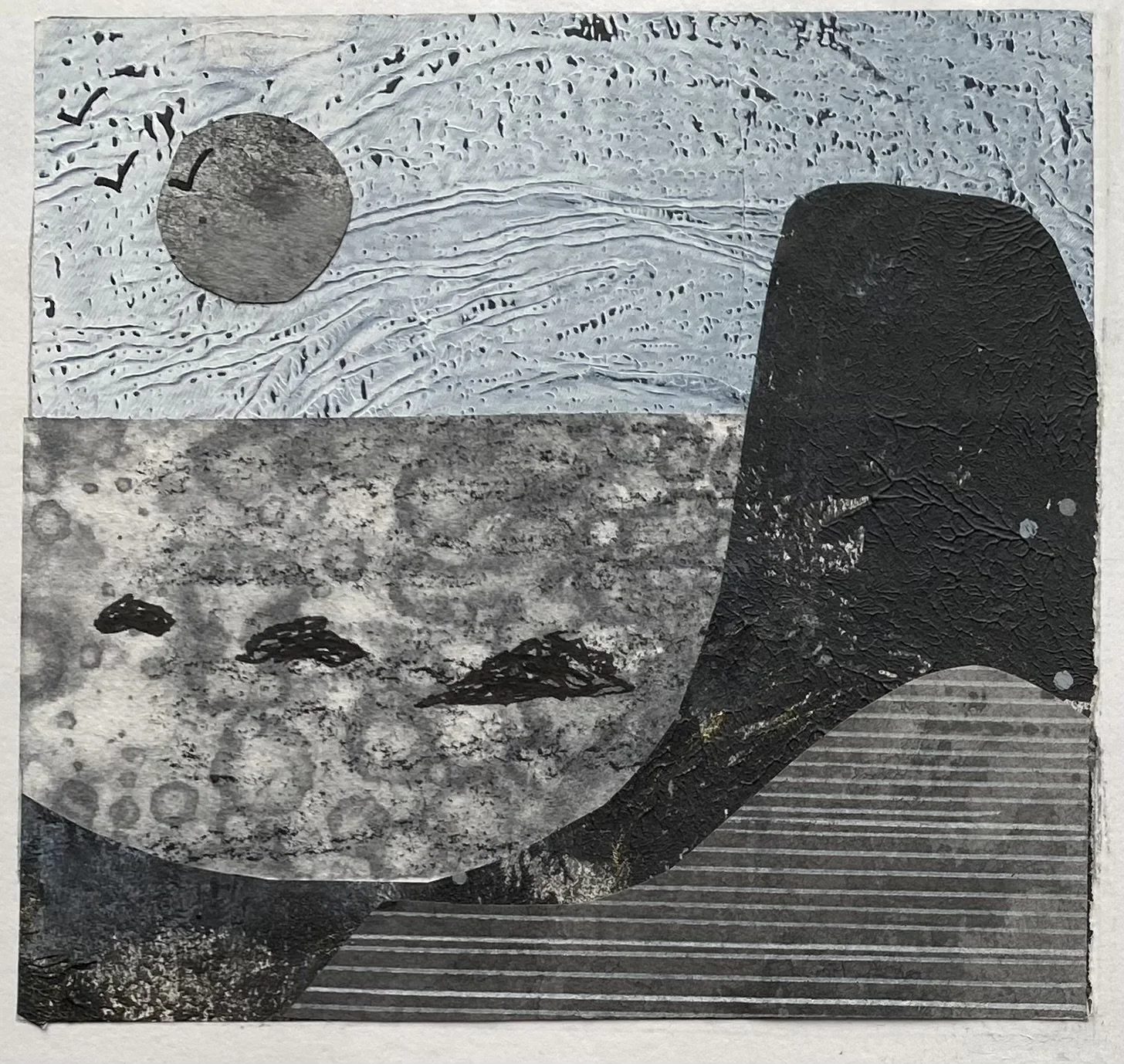
In this study, I explored contrast by working with black and white inks and a couple of mid-tone greys on wet-strength tissue paper. I did not begin with a fixed composition; instead, I chose three different tools and allowed the marks themselves to guide the process, letting an abstracted landscape emerge organically.
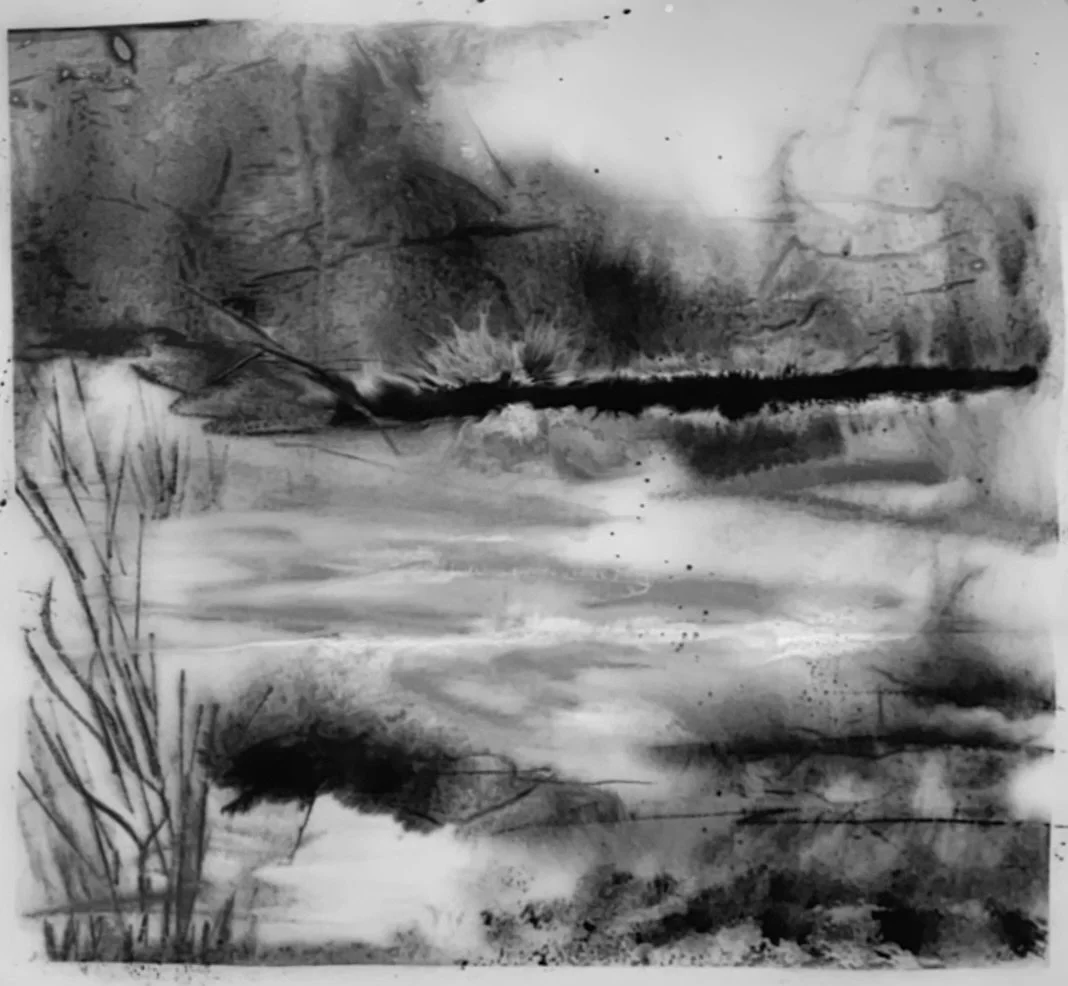
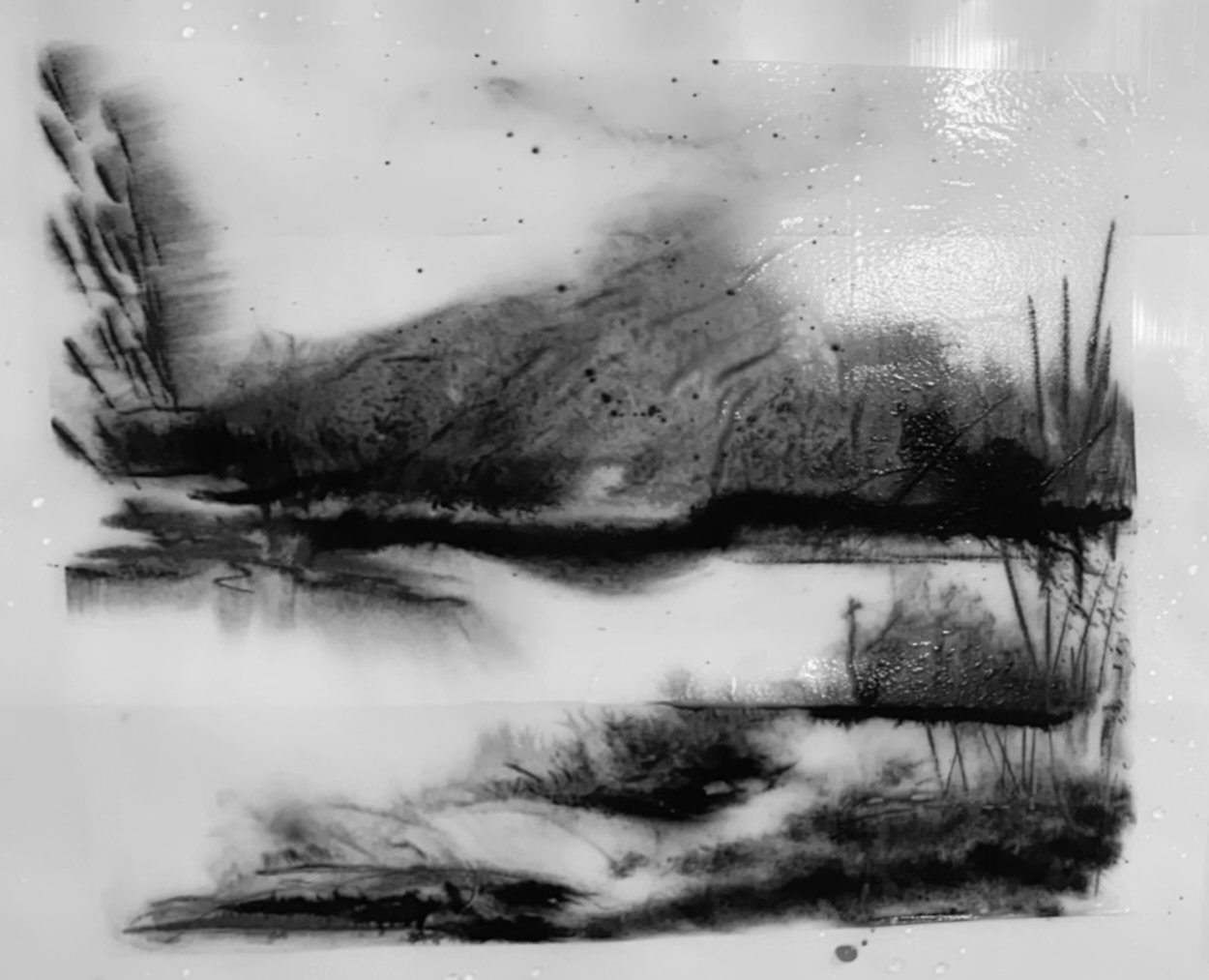
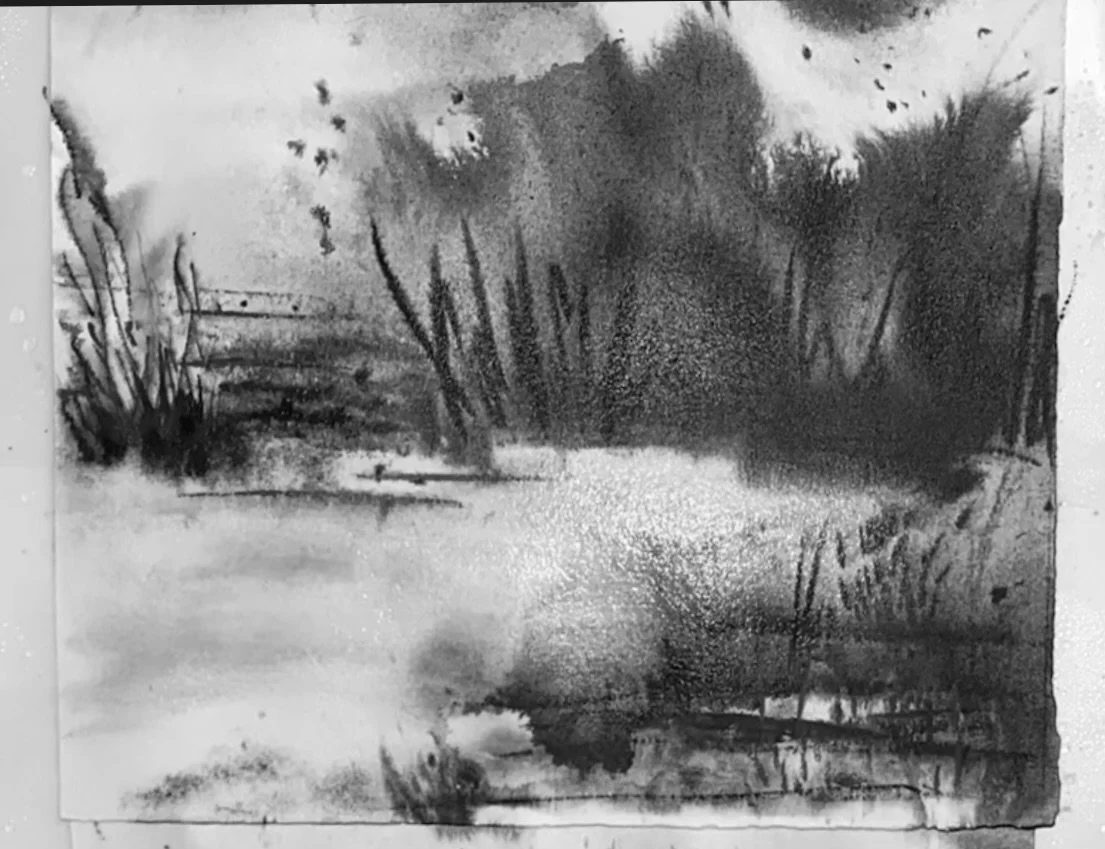
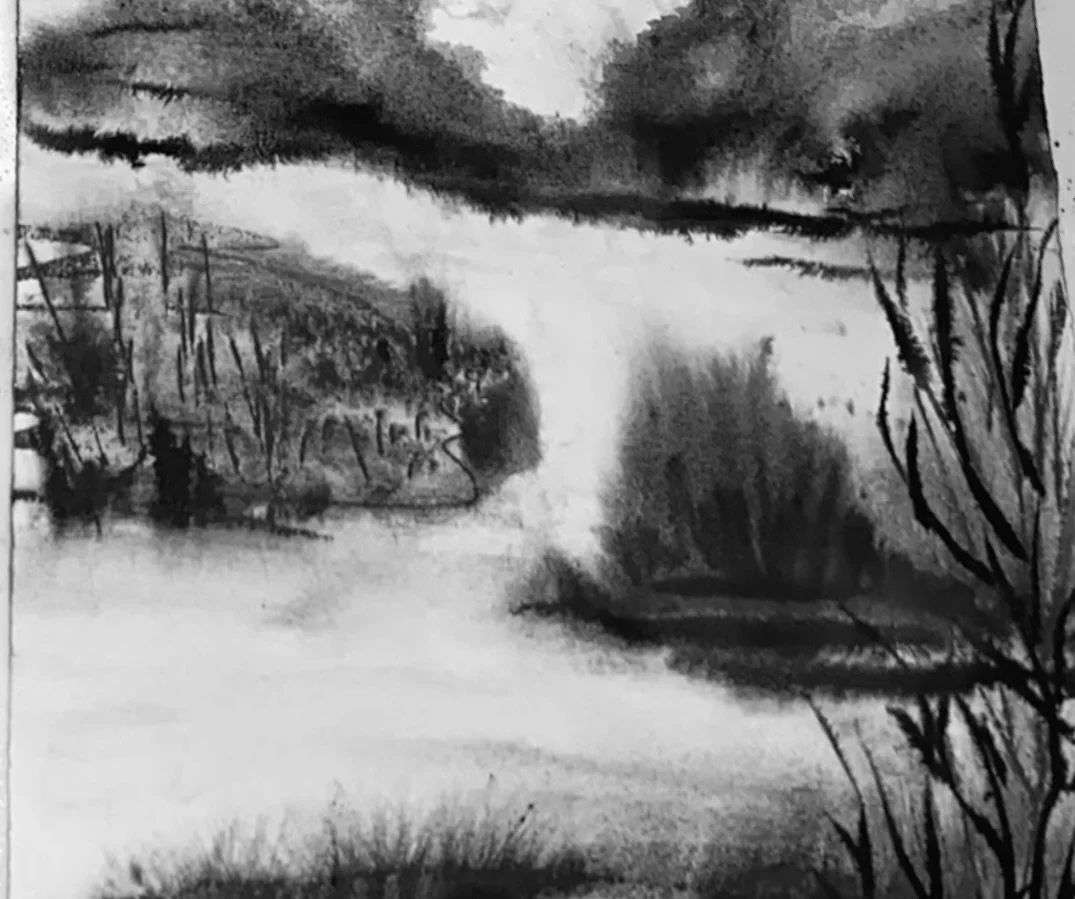
Once the tissue paper had dried, I collaged it to a white wood board using matte medium, creating a base (ground) to build upon. From there, I continued developing the piece with more collage, acrylic paint, charcoal and ArtGraf.
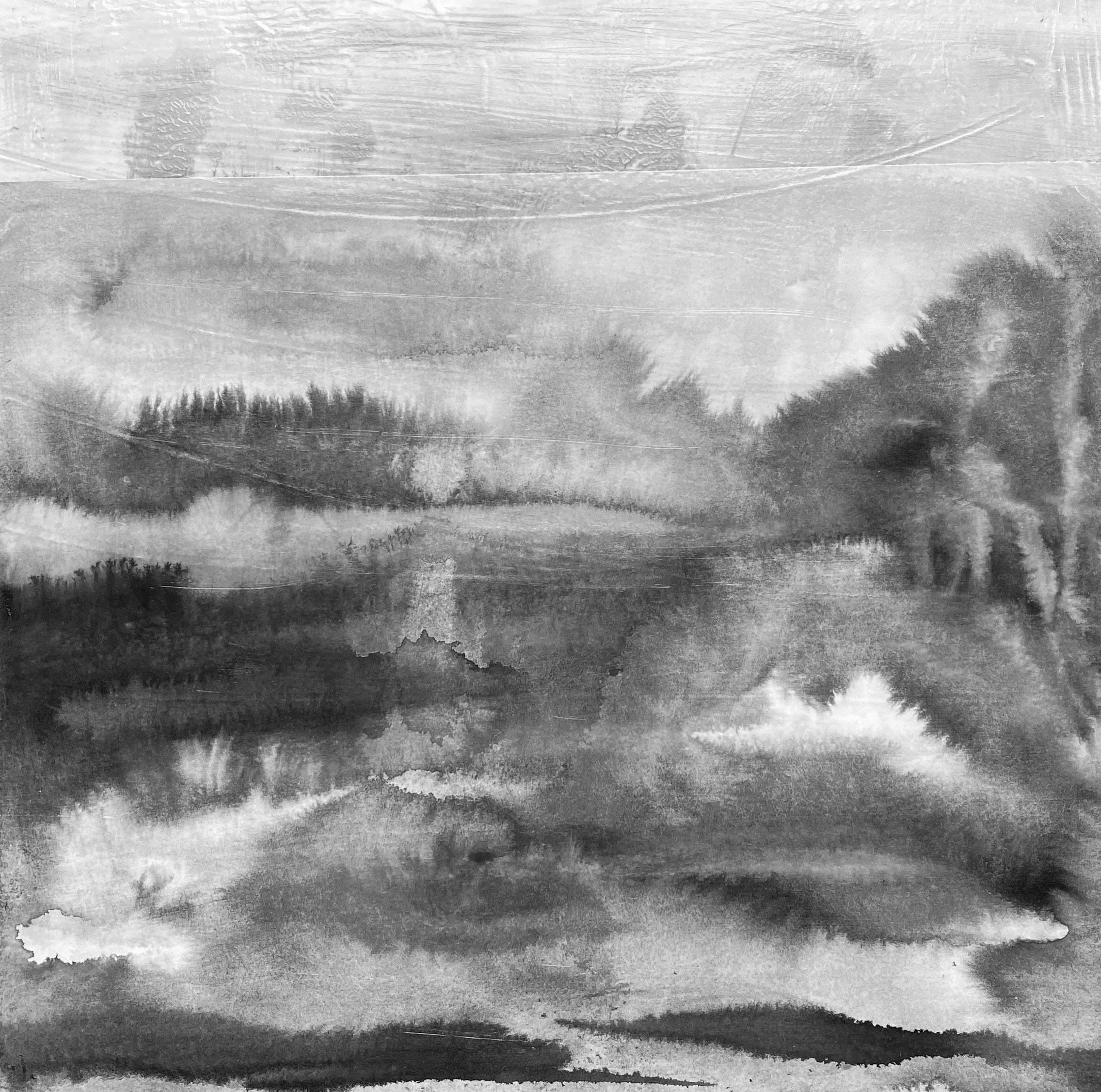
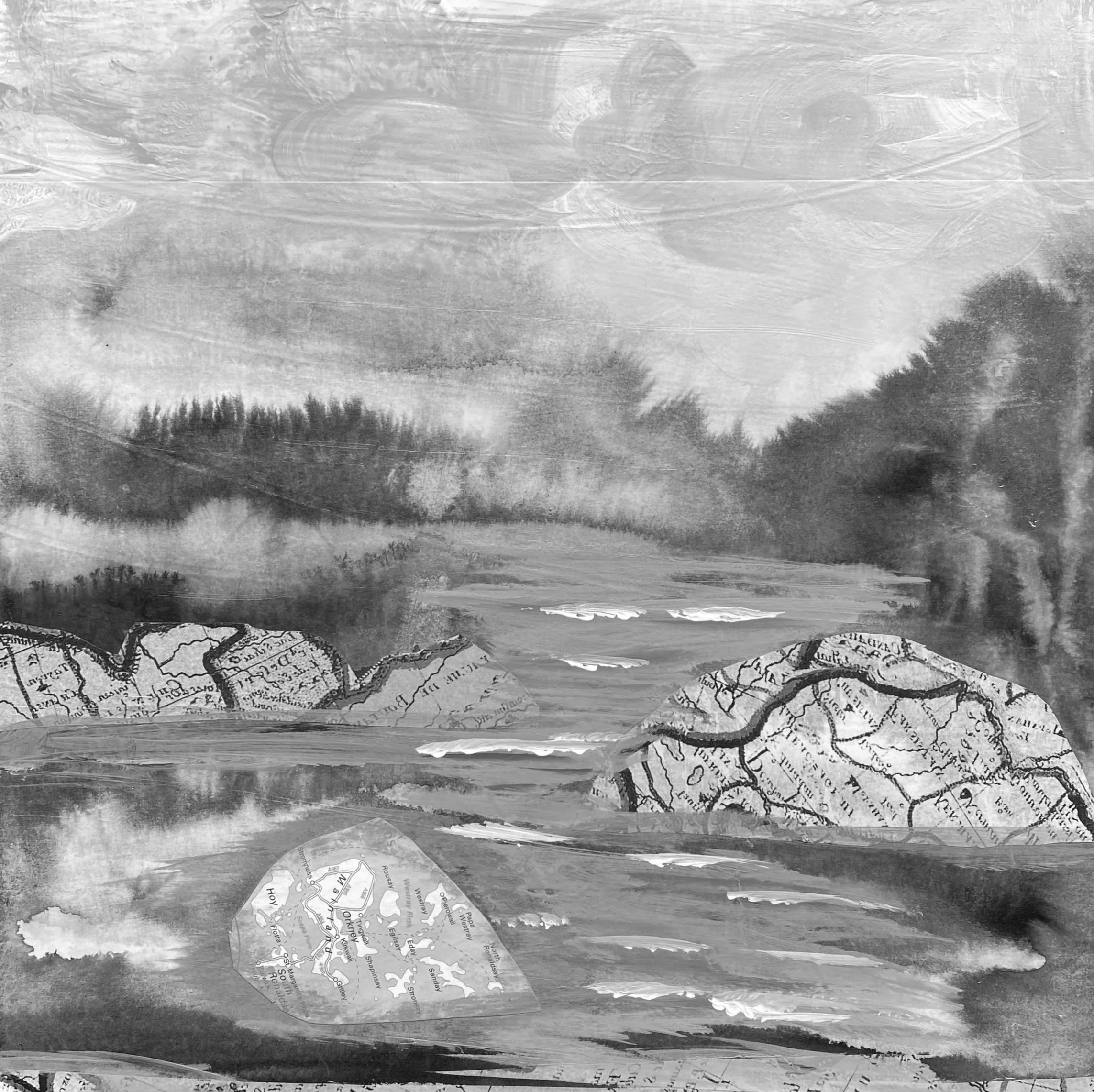
This process has become a valuable way for me to explore landscapes beyond direct observation—working instead with memory, intuition, and the expressive potential of marks.
Work in Progress
Here are some works currently in progress. At this stage, the questions become more open-ended: is the painting fundamentally light or dark? What mood is it holding, and is that the mood I want? Should the water remain light, or would it be more powerful rendered in deep shadow, with the rocks or foliage carrying the light instead?
These decisions feel central to the direction of each piece. In monochromatic work, even small shifts in value can completely alter the atmosphere.
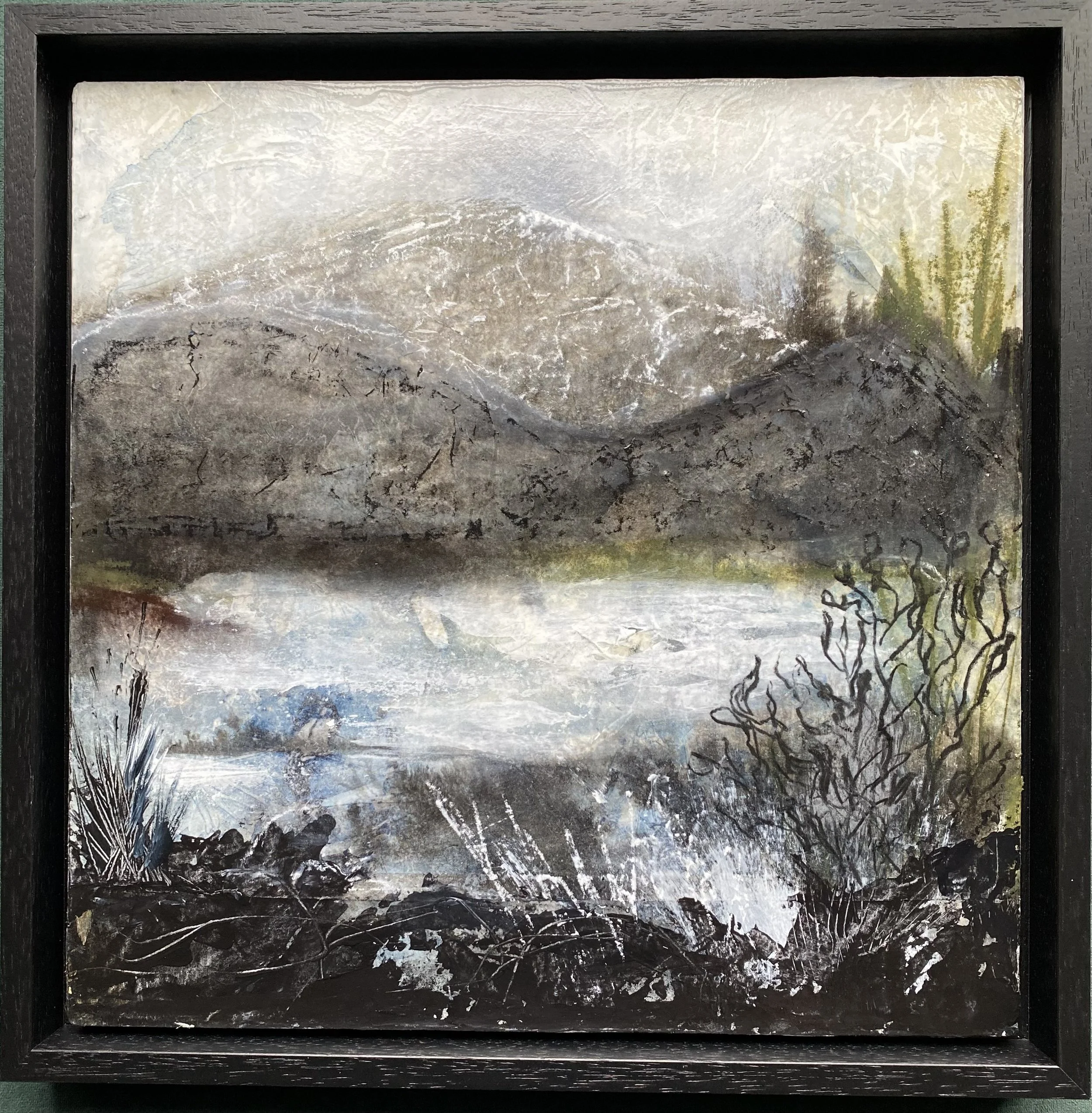
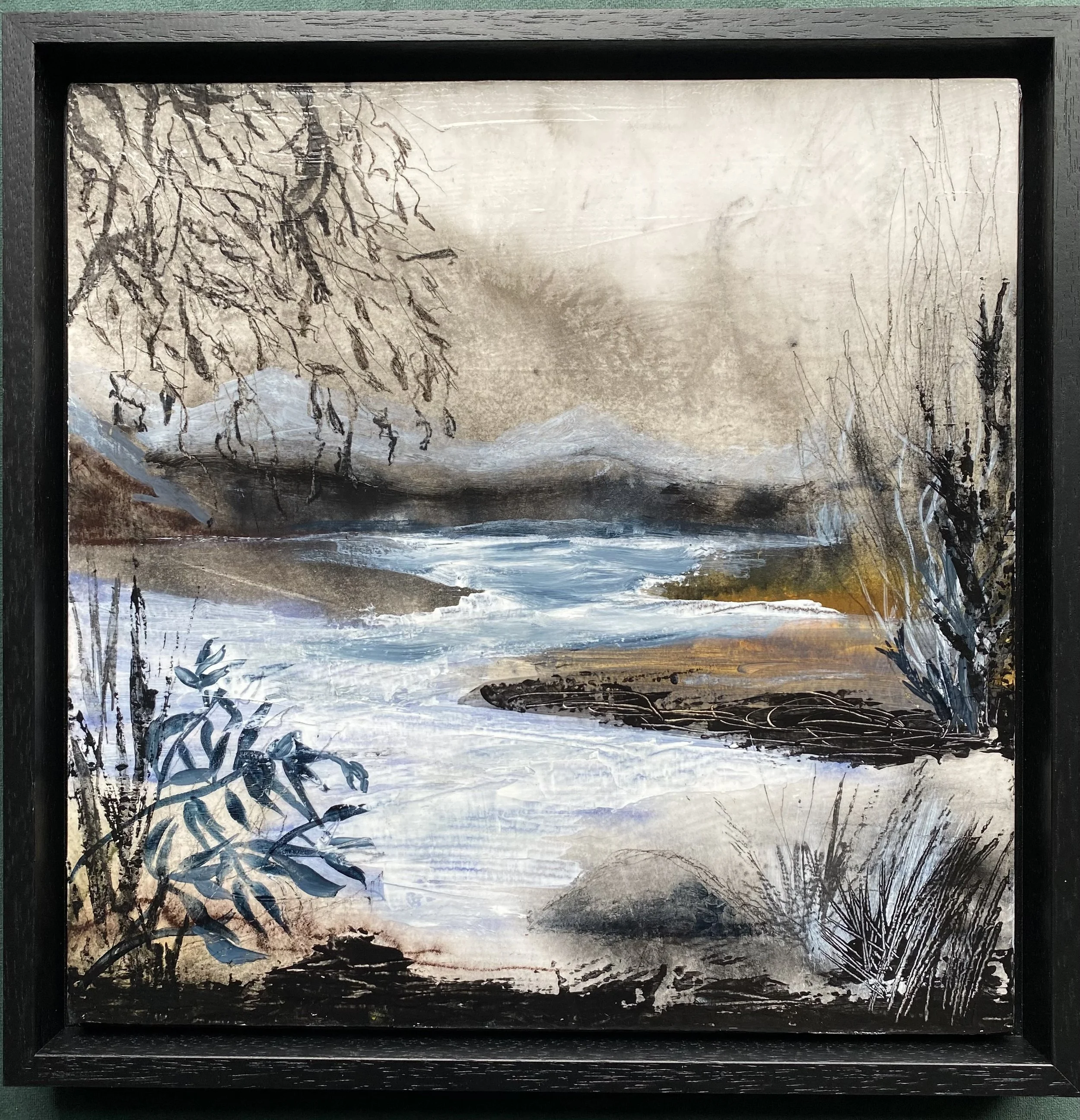
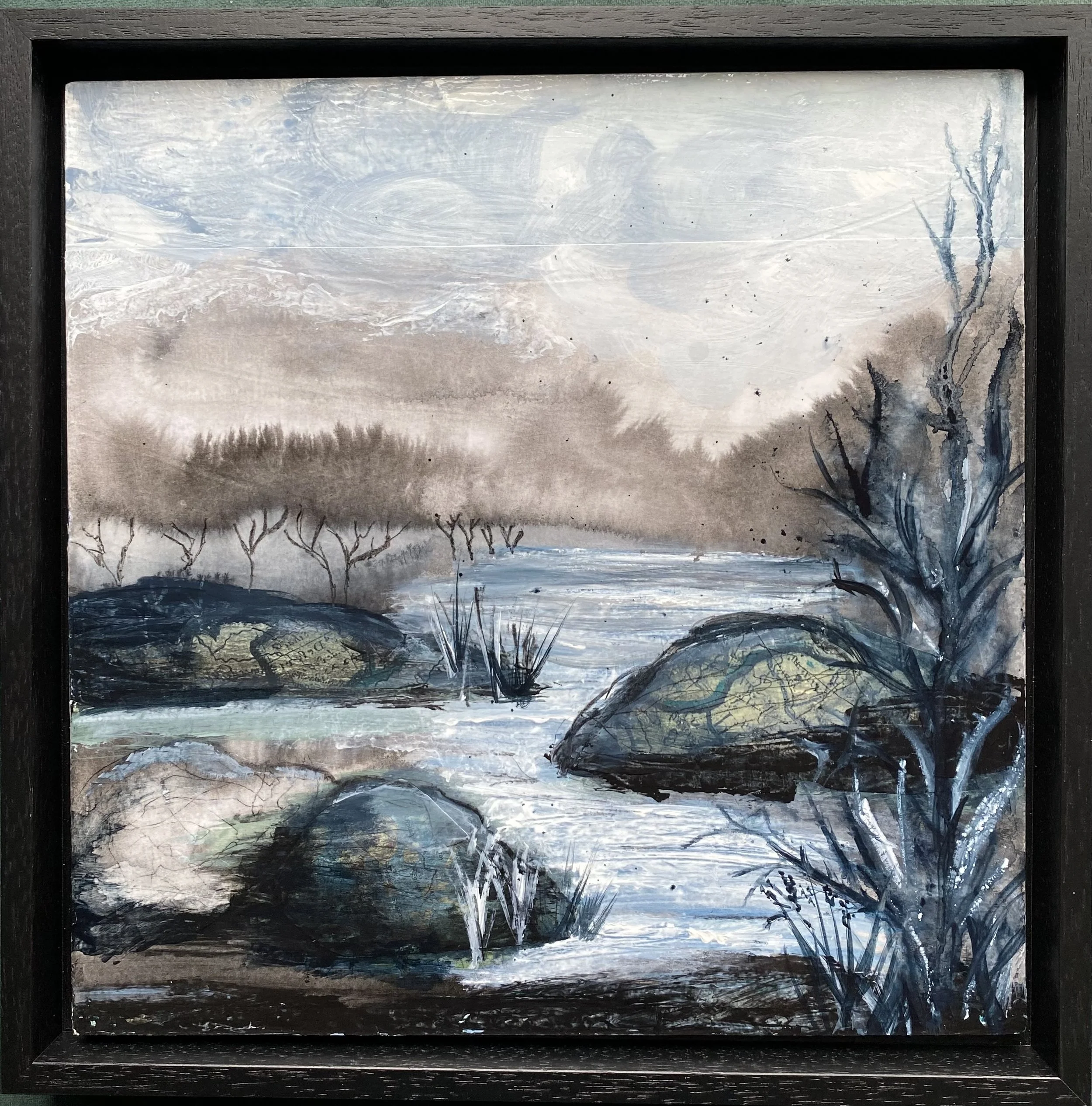
Monochromatic exploration enables simplifying, trusting fewer elements, and focusing on what truly matters in an image. Looking at Baugh’s work reminds me that it is possible to say a great deal with very little—that a handful of shapes and values, carefully observed and placed, can carry real emotional weight.
That is something I want to move closer to in my own work: less noise, more clarity, and a stronger sense of presence. If I can capture even a fraction of that theatrical, evocative quality—where light and shadow do the storytelling—then I feel like I am heading in the right direction.