
Creative play is often the gateway into meaningful artistic work. For many artists, it’s not about immediately producing a finished piece—it’s about entering a state of flow. Every artwork evolves one step at a time, with each decision shaped by the one before it. By creating a context to respond to, we allow the work to guide us as much as we guide it.
There are countless ways to begin. It might be as simple as sketching or painting in a journal for 20 minutes, or working on a large sheet of paper divided into grids and experimenting freely with mark-making. Removing the tape at the end to reveal the outcome can feel like uncovering something unexpected and exciting.
When intuition feels a little out of reach, using prompts can help spark momentum. Drawing with your non-dominant hand, using stencils, incorporating collage, experimenting with inktense sticks, or limiting your time can all lead to surprising combinations of marks and shapes—often opening doors to ideas you wouldn’t have planned.
Exploring Mark-Making on Large Surfaces
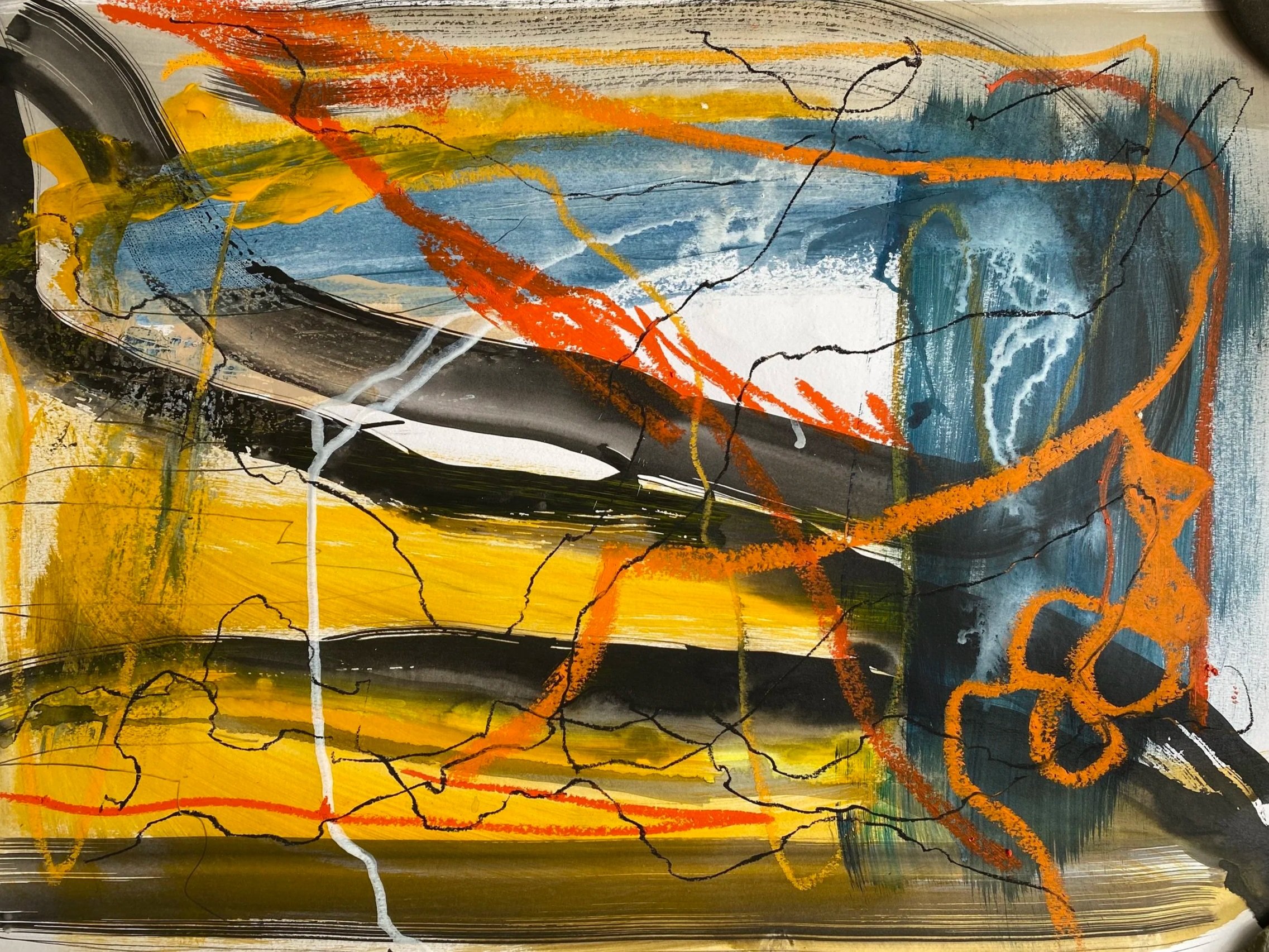
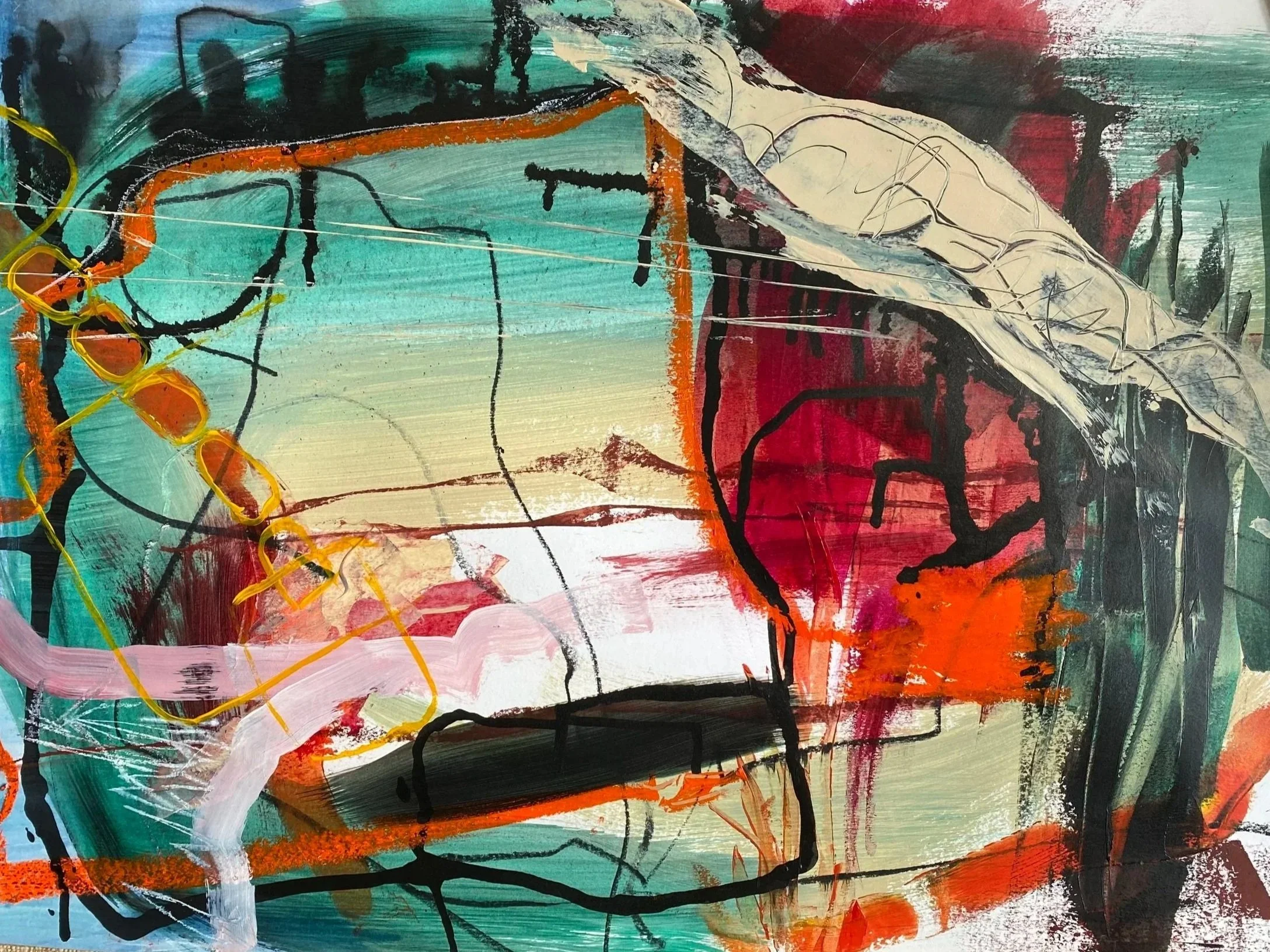
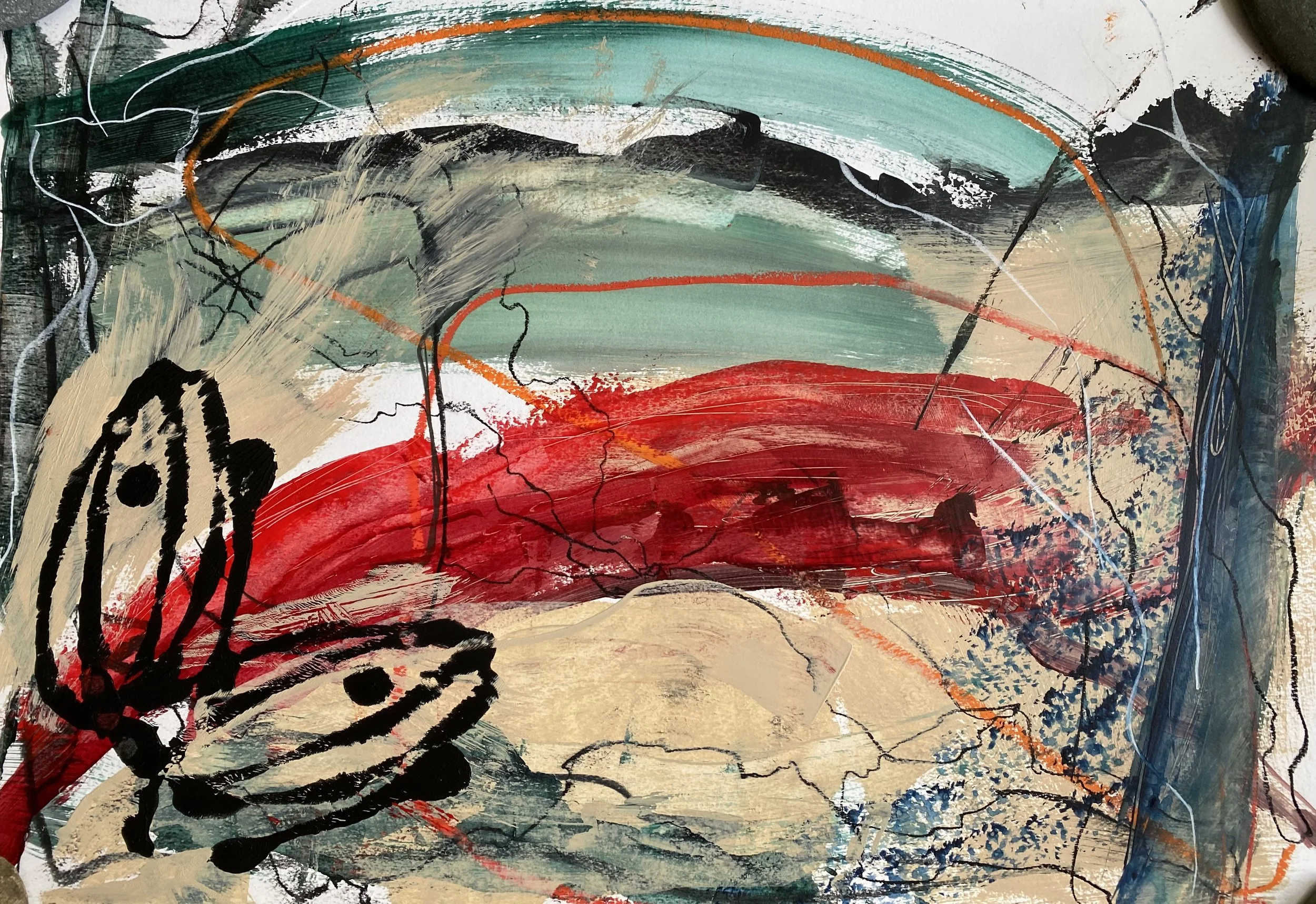
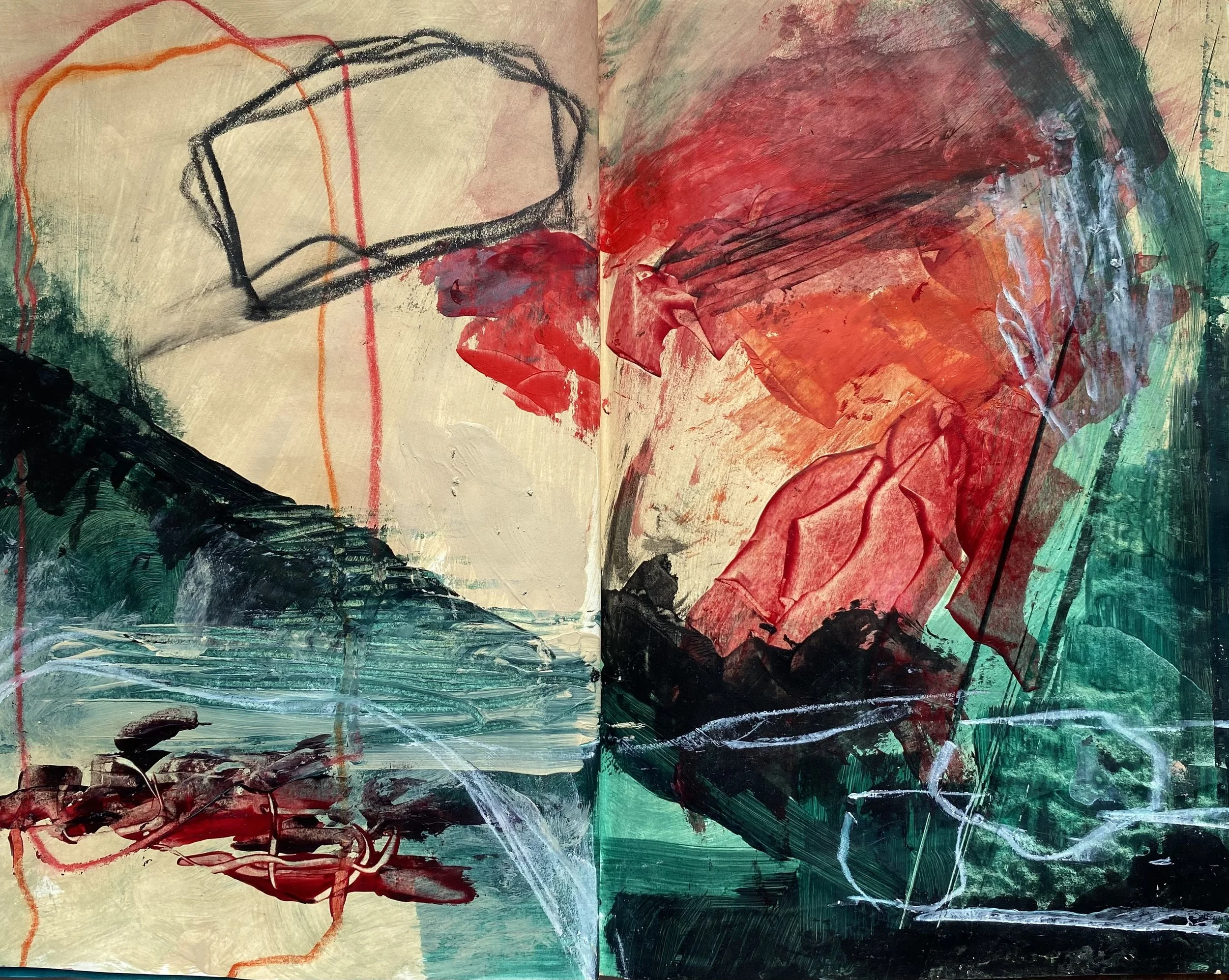
This week, I explored intuitive mark-making on large sheets of paper, with the intention of later cropping smaller compositions—and even using some of the cut pieces for collage.
I was inspired by Lewis Noble’s approach of working across multiple sheets at once, then tearing and rearranging them to discover more dynamic compositions.
I worked on four A2 mixed media sheets, choosing a limited palette and materials beforehand. For a change, I tried working on the floor—something I’d seen in David Mankin’s practice—and it pushed me well outside my comfort zone. It felt clumsy at first, especially while navigating around a cat and a very curious seven-year-old! Things got messy quickly.
I also noticed a familiar tendency to overwork the surface. Next time, I will remind myself to leave more space—to allow quiet areas to exist alongside the busyness of marks.
Seeing Through the Viewfinder
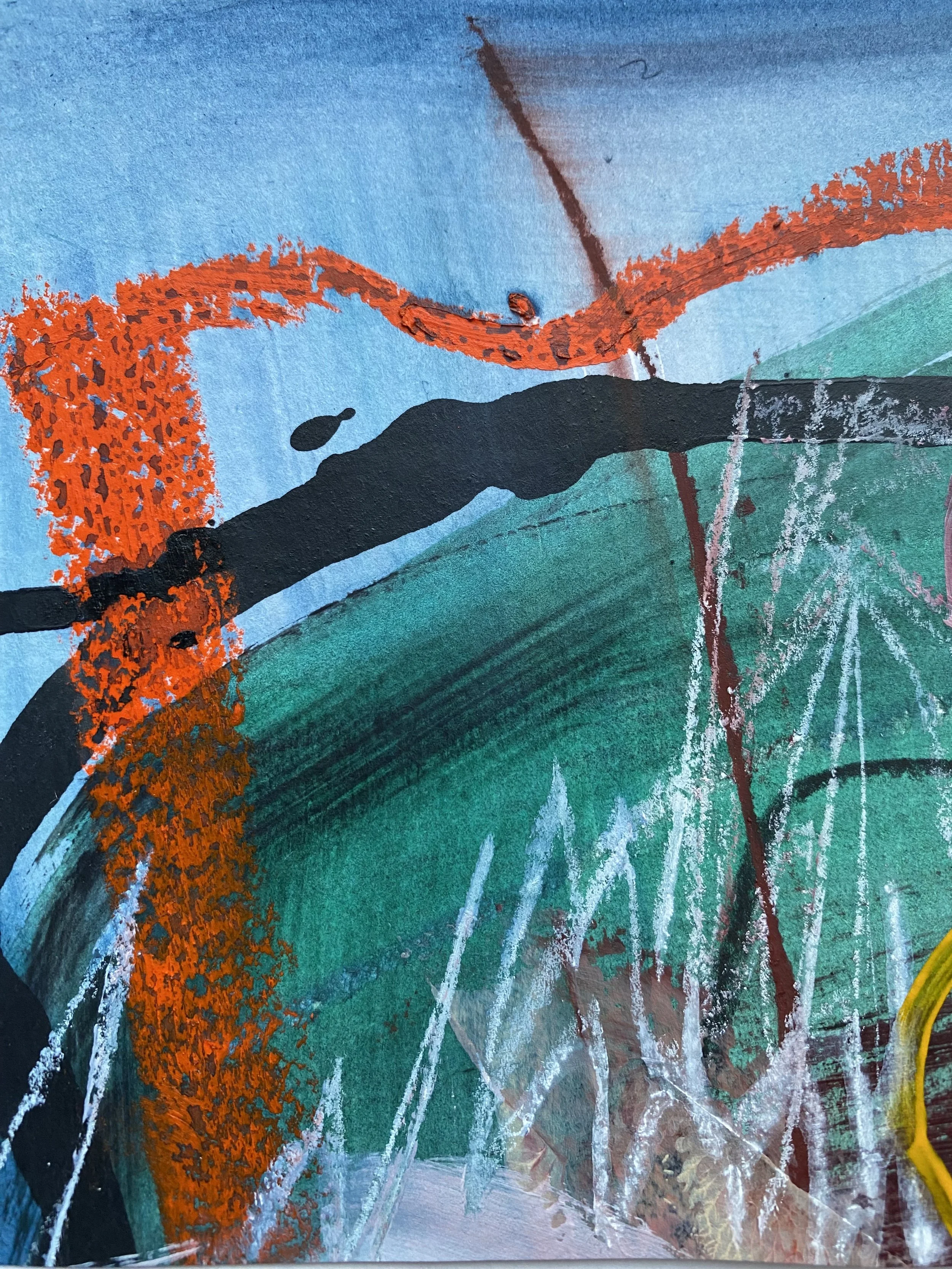
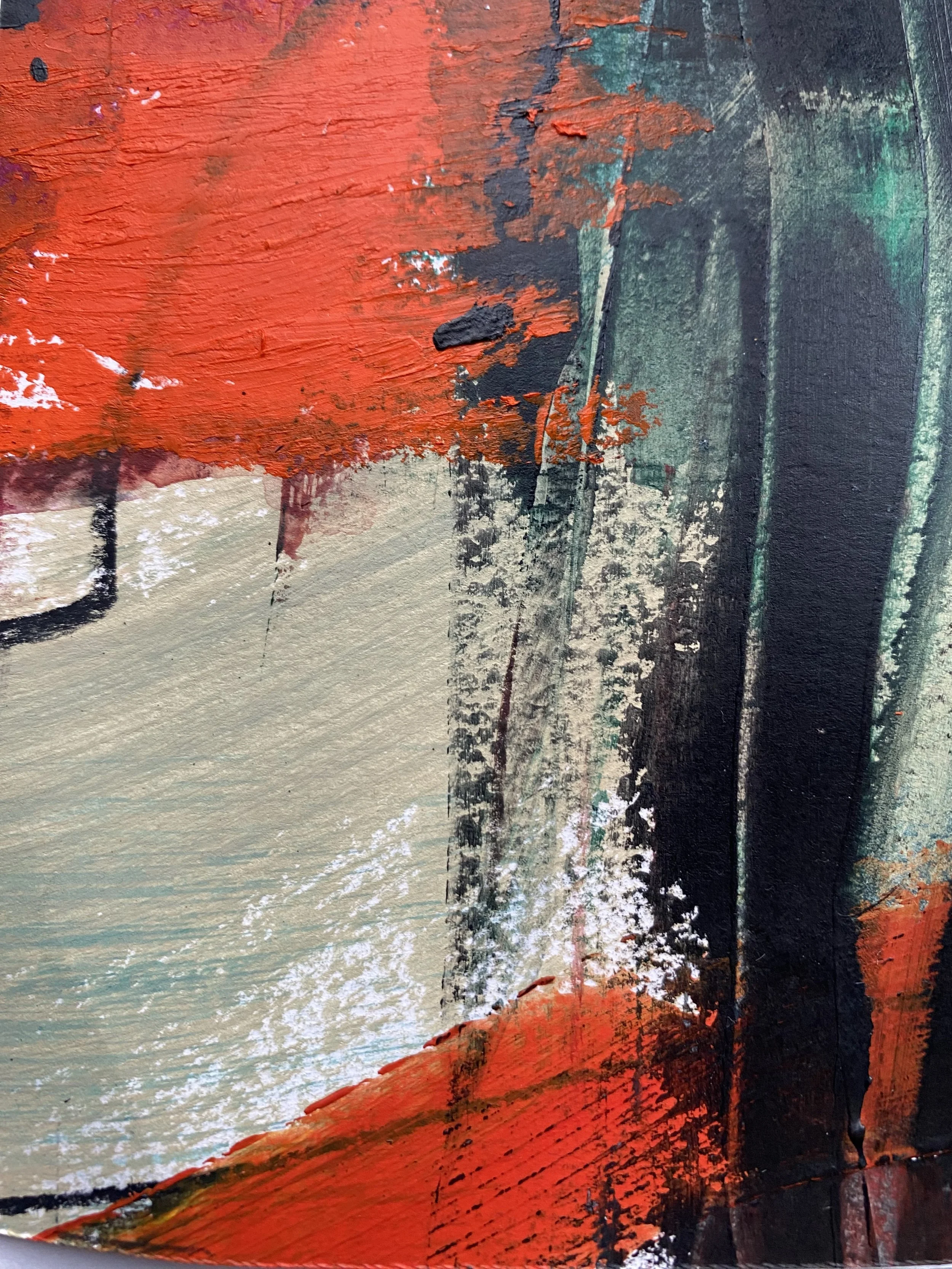
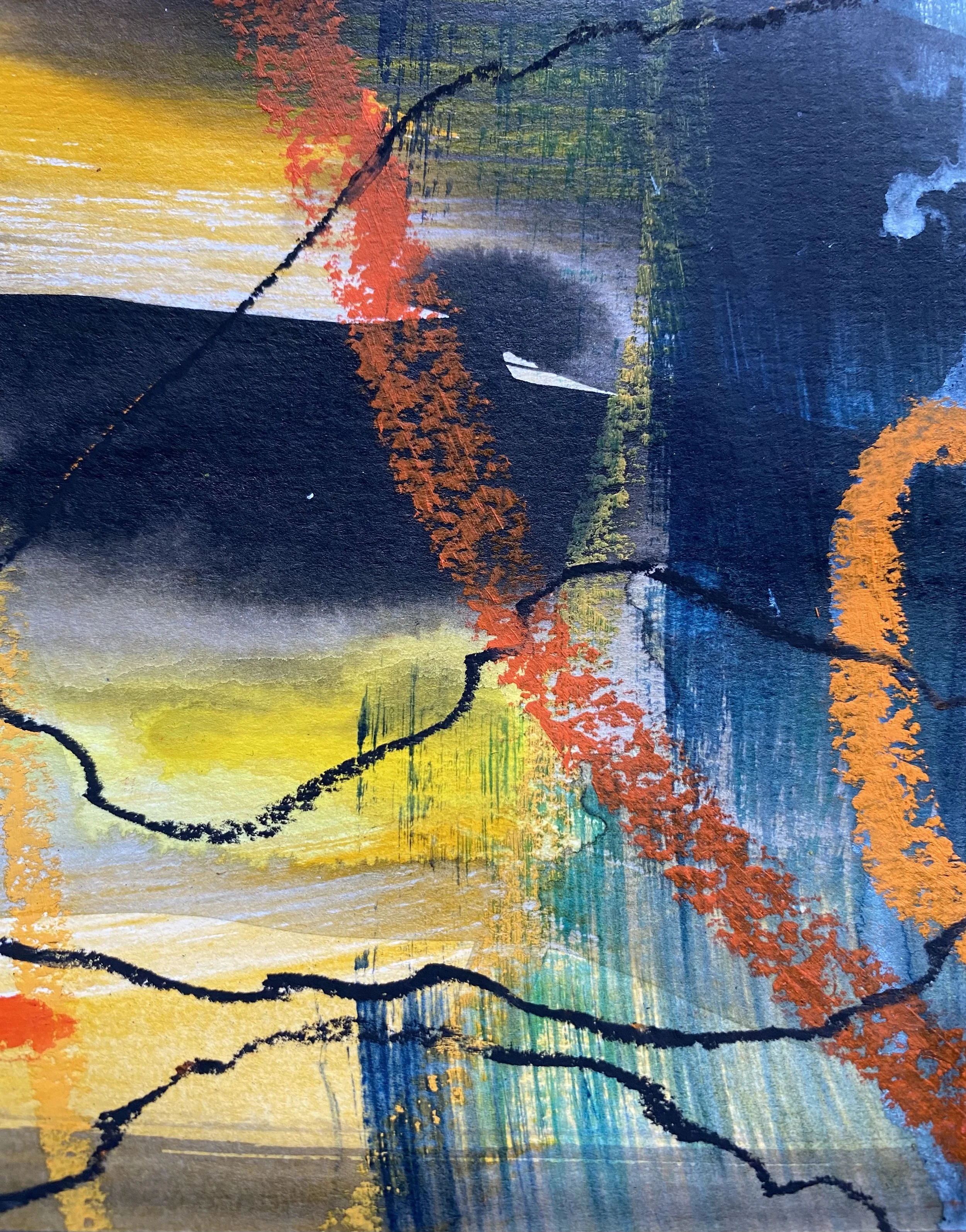
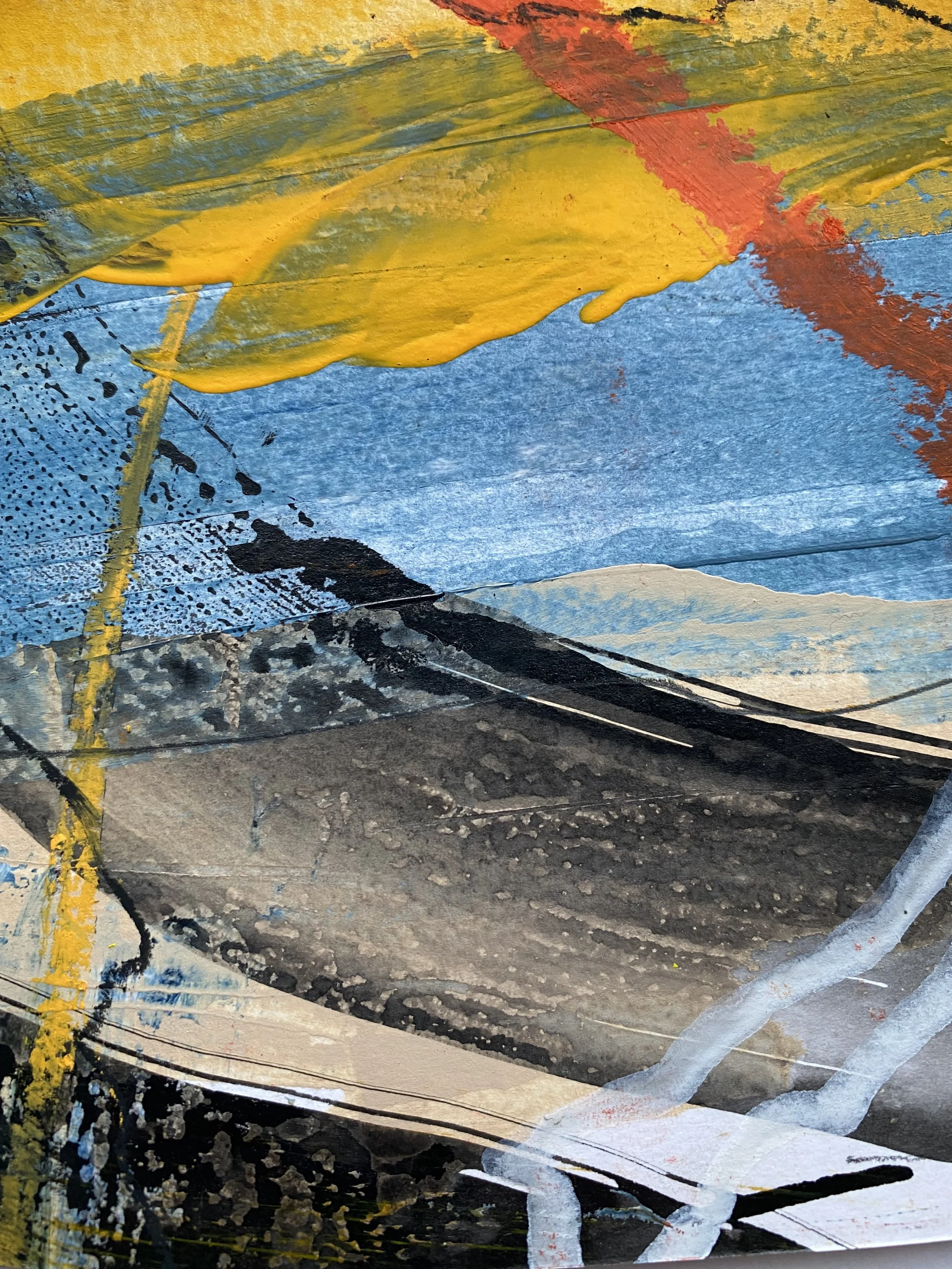
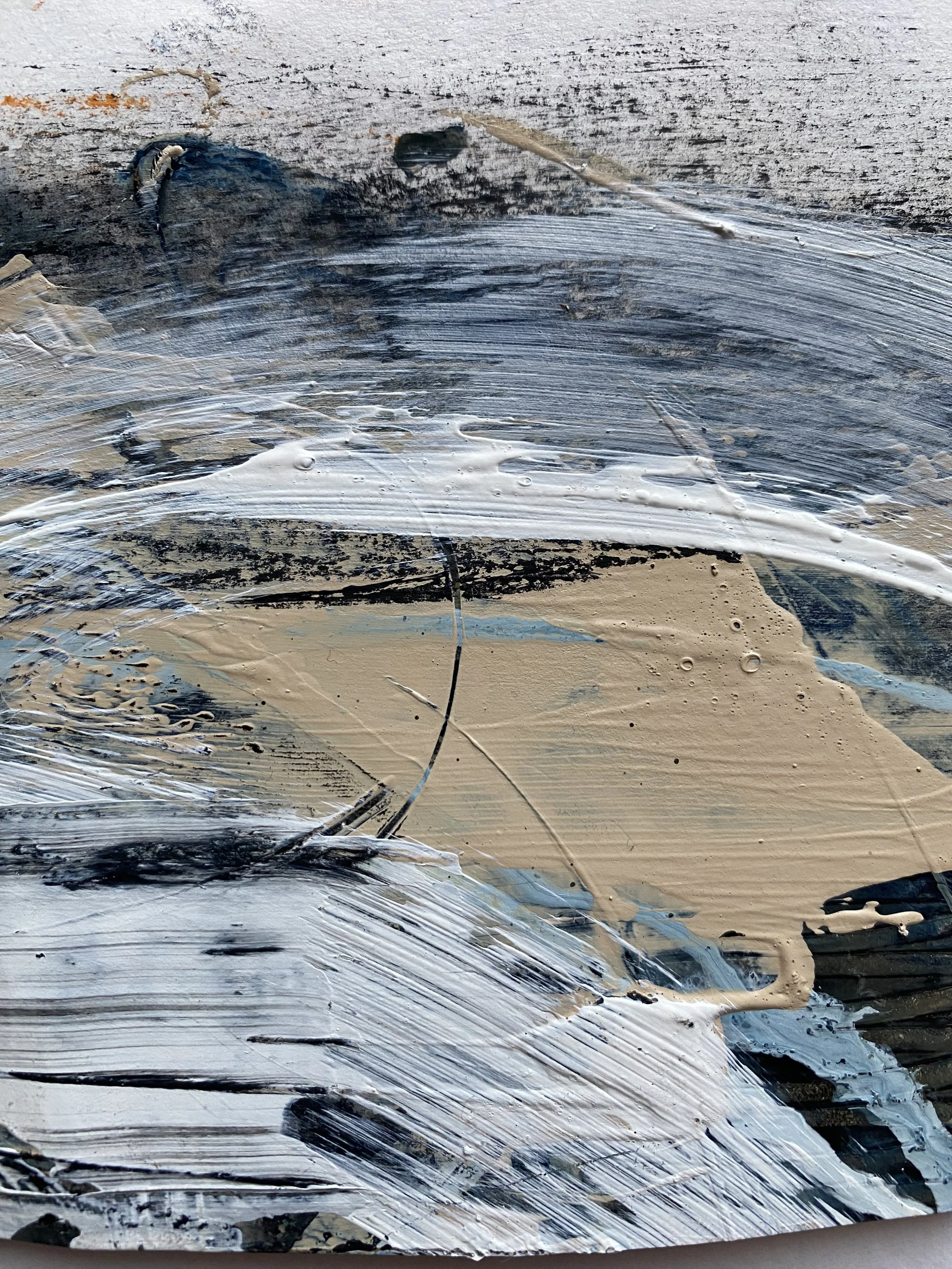
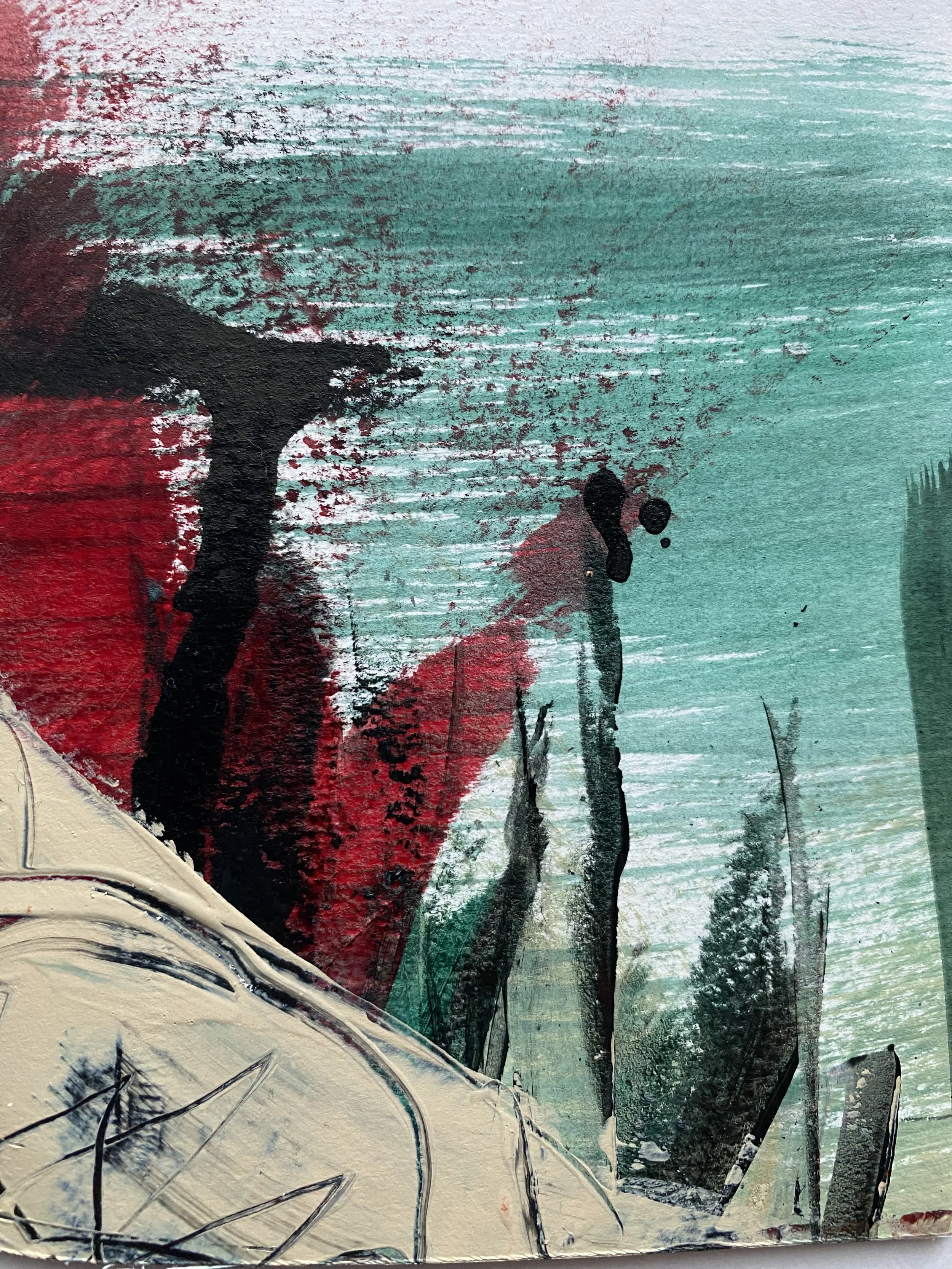
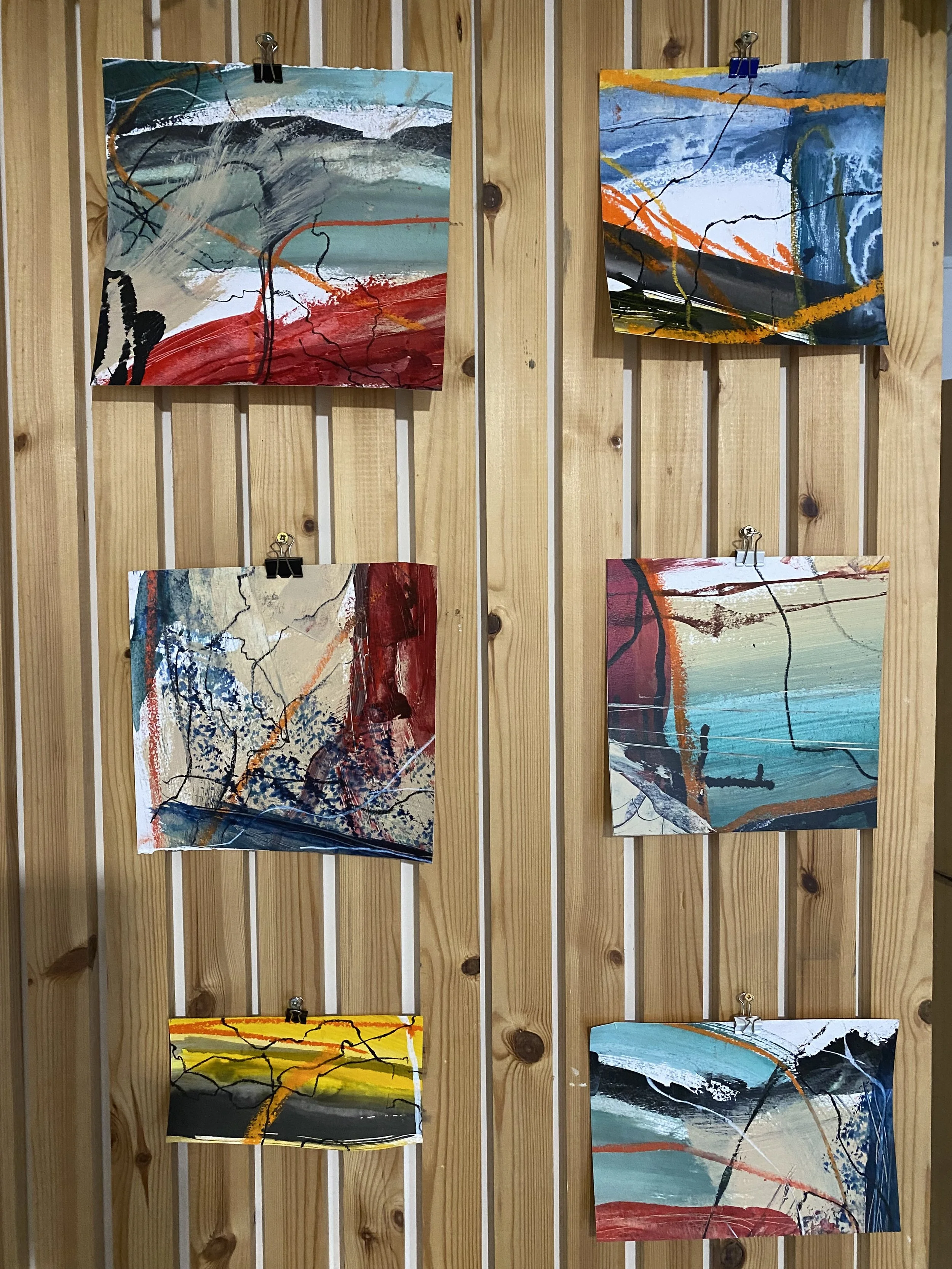
Once the sheets were complete, the next step was to search for interesting compositions using viewfinders of different sizes.
This process felt like a treasure hunt—looking for moments where colour, shape, and mark-making came together in a compelling way. Finding quieter areas within the visual noise was challenging, but incredibly rewarding when something clicked.
Collage Time
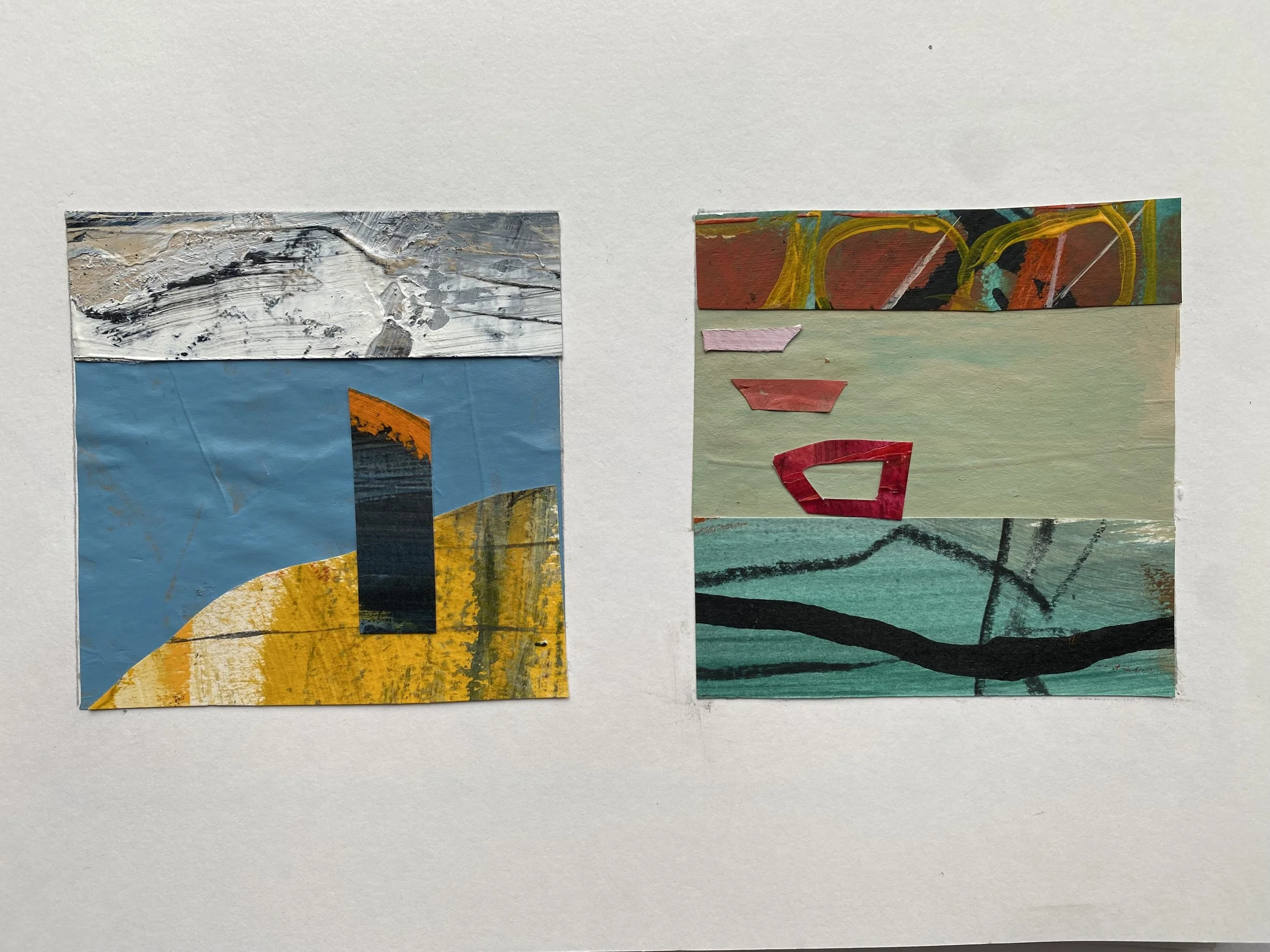
Collage is one of my favourite processes, and this week I explored two approaches inspired by Catherine Rains and David Mankin. Catherine’s method introduces structure, which I find helpful in simplifying composition.
I began by sorting my paper cuts into six piles organised by value (low, medium, and high):
Three “quiet” groups
Three “loud” groups (with busier, more patterned papers)
From there, I worked within a grid—choosing a 4x4-inch format, using four values of quiet and loud papers, and varying their sizes within each cell. This restriction helped keep things intentional and prevented overcomplicating the design.
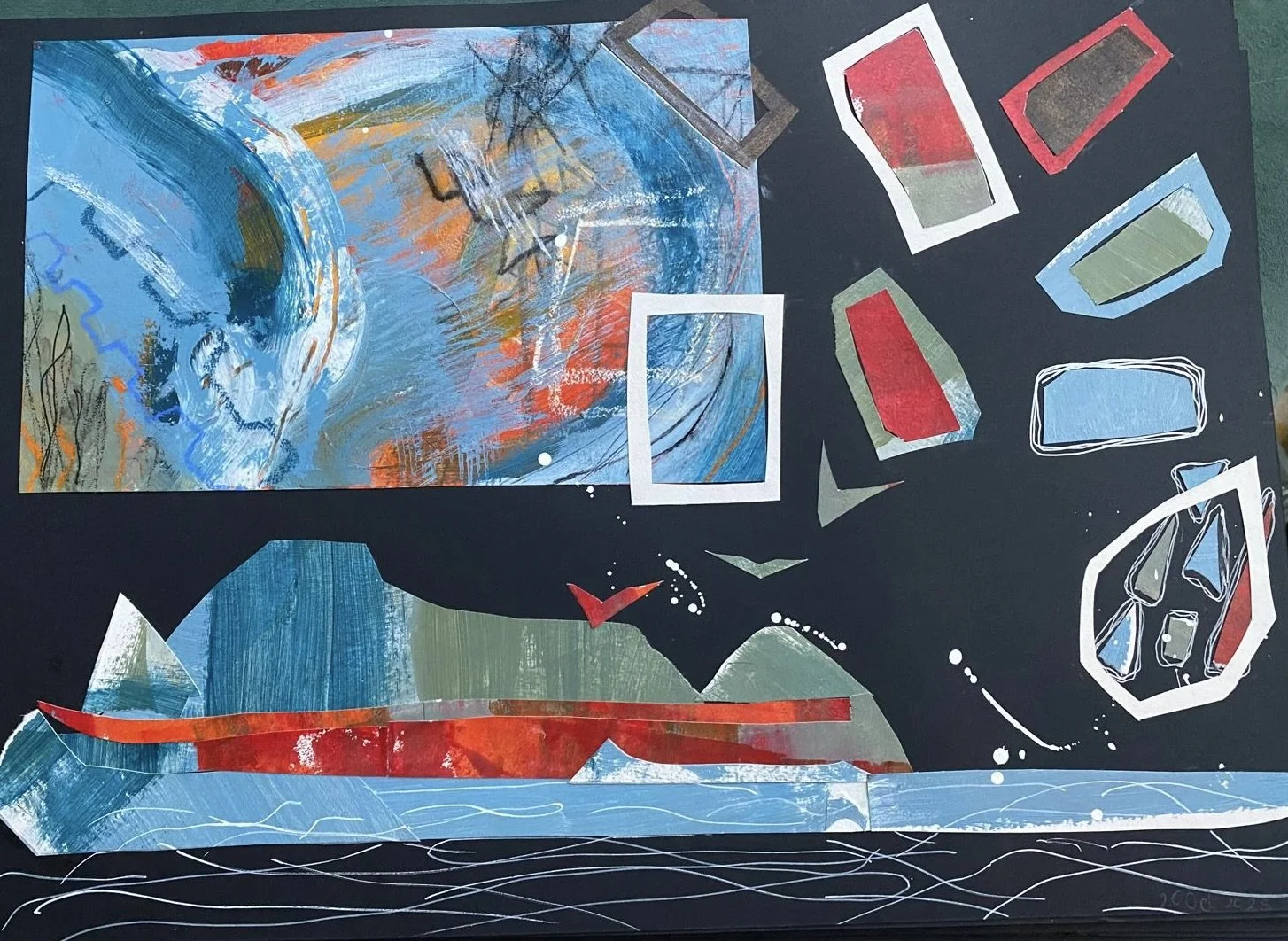
After exploring this more structured approach, I shifted to a freer, more intuitive collage style, inspired by David Mankin. Letting go of the grid allowed me to respond more instinctively—following shapes, textures, and rhythm rather than rules—which brought a different kind of energy to the work.
Mark Making on Wood Panels
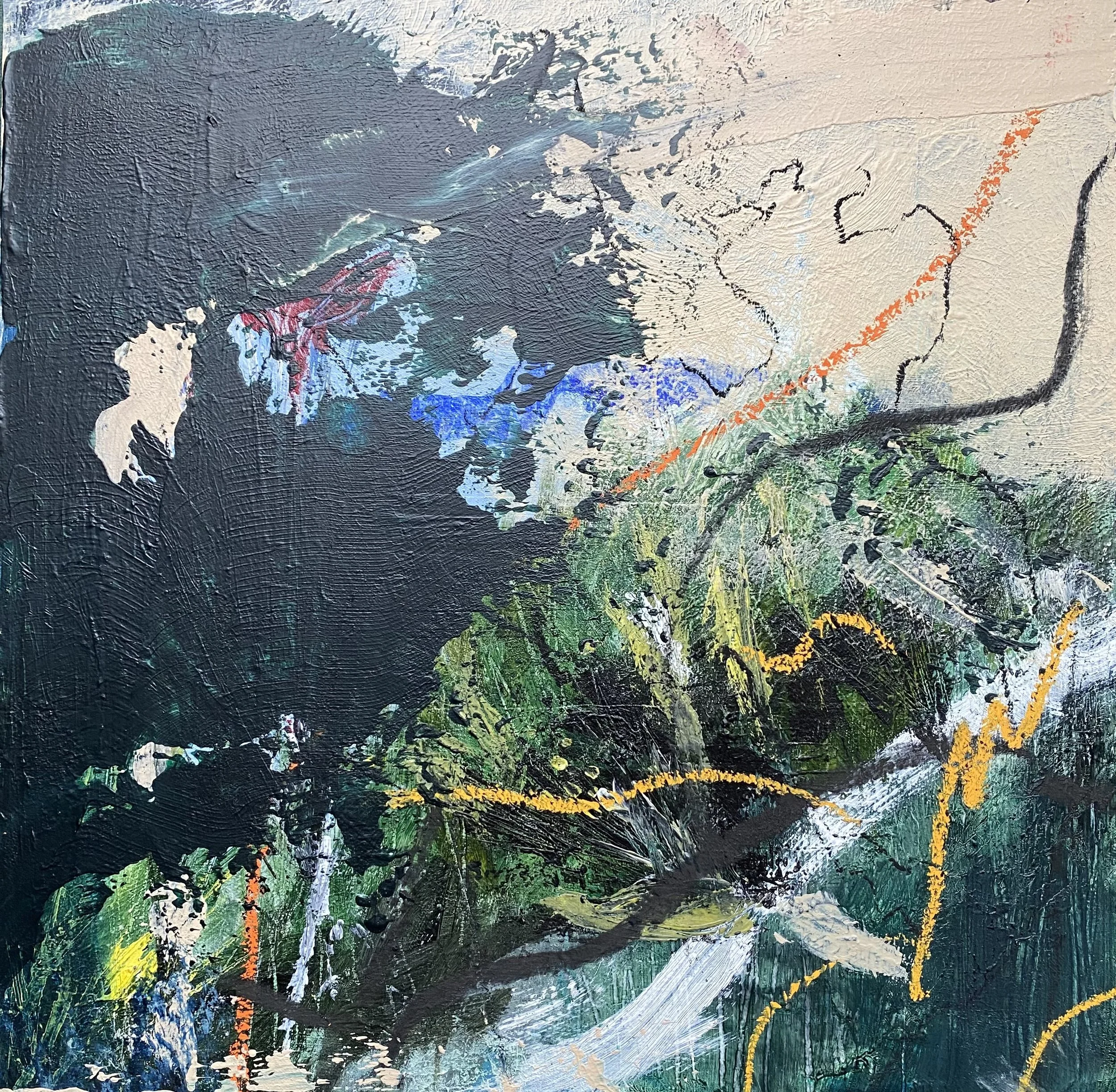
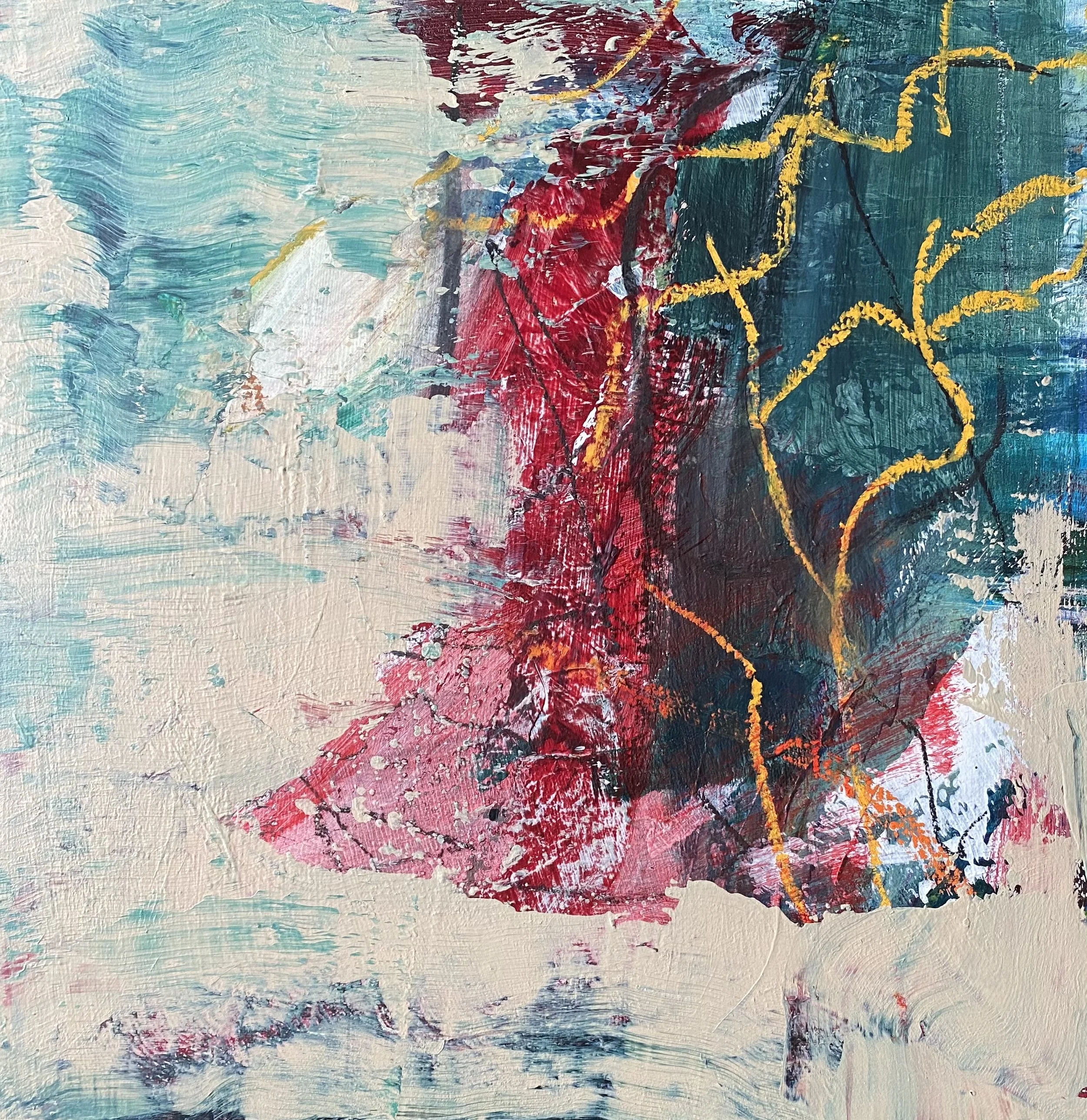
I’ve recently started the 12-week Creative Visionary Program with Art2Life, where we’ve been exploring play both in our journals and on 12x12” wood panels.
Music has played a big role in this process—it has a powerful way of shifting mood and unlocking creative energy. We’ve been listening to curated playlists by Adam Rosendahl on Spotify, painting intuitively and without overthinking. My panels don’t feel particularly resolved yet, but that’s not the point. The experience itself—loosening up, experimenting, and responding instinctively—has been incredibly energising.
Why Play Matters
Play should never be underestimated. These exploratory studies often become the foundation for larger, more resolved works.
The key is to quiet the analytical mind at the beginning and allow intuition to lead. There will always be time later to step back, evaluate, refine, and develop—whether through cropping, collage, or further layering.
For now, it’s about showing up, experimenting, and staying open to discovery.
Stay tuned for more explorations in the coming weeks.